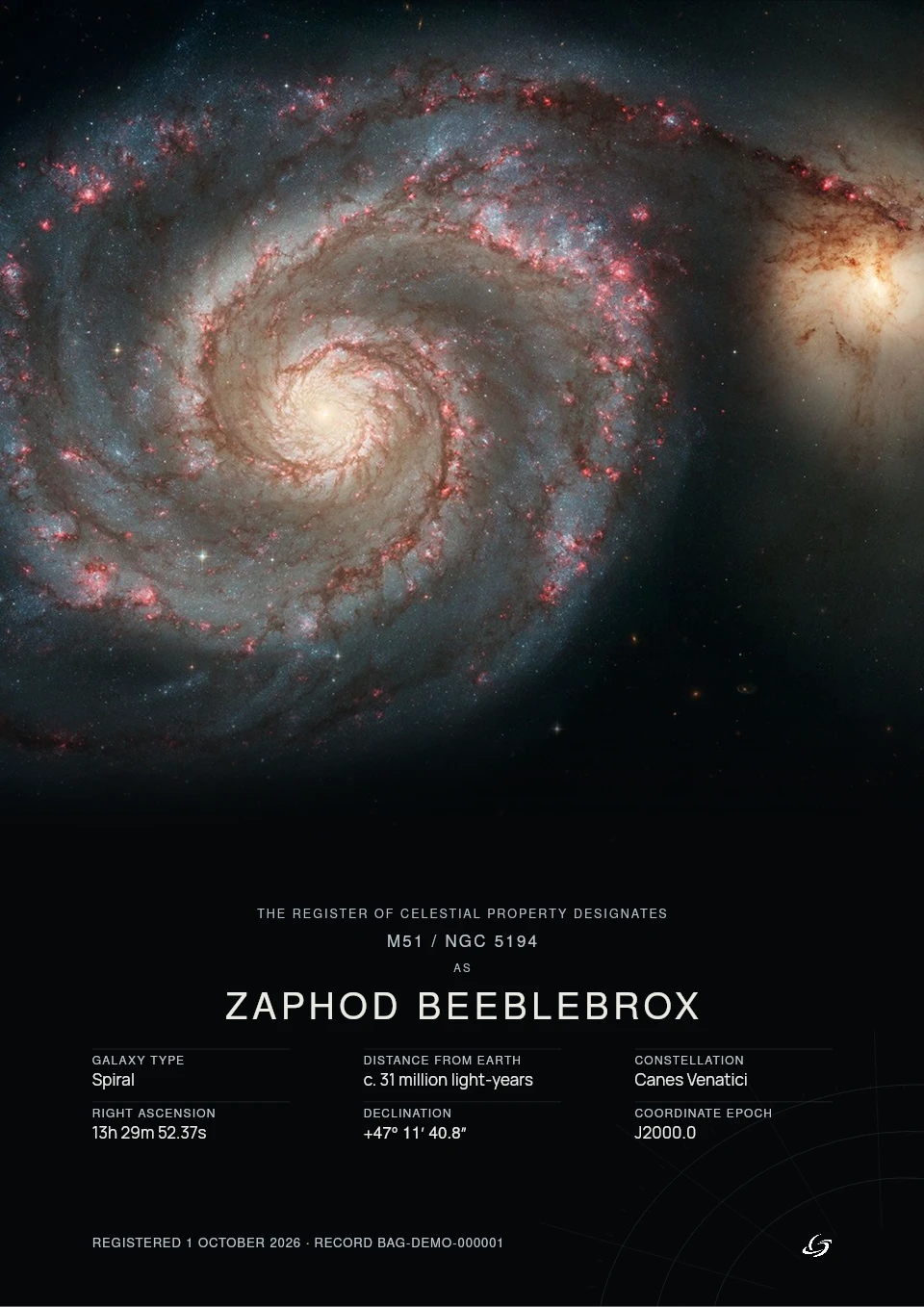
A3 or A4 artwork
Your selected galaxy, your chosen name and genuine astronomical details in our approved print design. Choose A4 or A3 for a physical print.
High-resolution digital artwork is included with every package.

 Claim This Galaxy
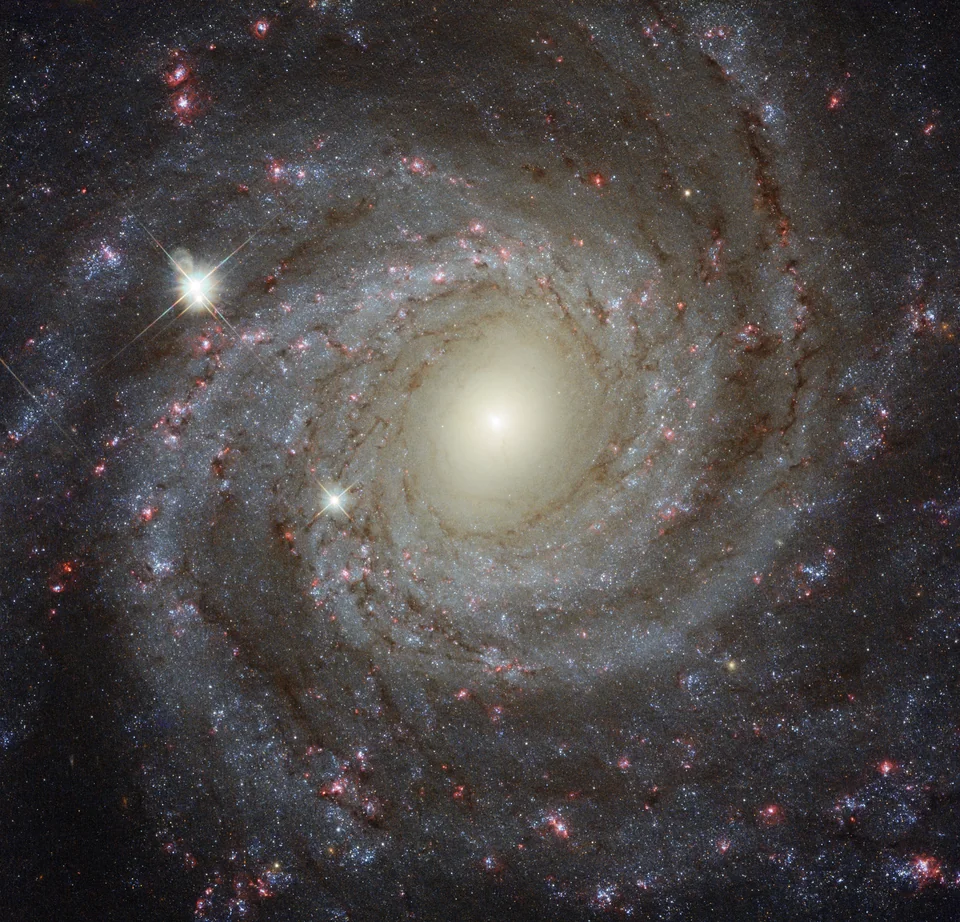
ESA/Hubble, NASA
Observed Image · View astronomy source
Observed ImageFull image credit, source & interpretation
Official catalogue designation: NGC 3344
Your name for it: ZAPHOD BEEBLEBROX
A face-on, weakly barred spiral in Leo Minor. Hubble’s seven-filter observation reveals blue young-star clusters, red glowing gas and intricate dust lanes in its inner spiral. The bright spiked stars are foreground stars in our own Milky Way.
Values are rounded estimates and may be refined by further observations. Personal names remain ceremonial.
Claim This GalaxyA preview of a personalised gift. No order or reservation is made.
A larger A3 poster with a separate A4 printed certificate and printed factsheet. UK and US delivery available. Includes the full digital pack: artwork, certificate, factsheet and desktop/mobile wallpapers.
Paper sizes shown in proportion. Tap either piece to inspect your personalisation.
Live preview · your selected galaxy and personalisation.
Registration number is a demonstration, not a saved registry entry. Artwork image credit
Explore each item to see what’s included.
Your selected galaxy, your chosen name and genuine astronomical details in our approved print design. Choose A4 or A3 for a physical print.
High-resolution digital artwork is included with every package.
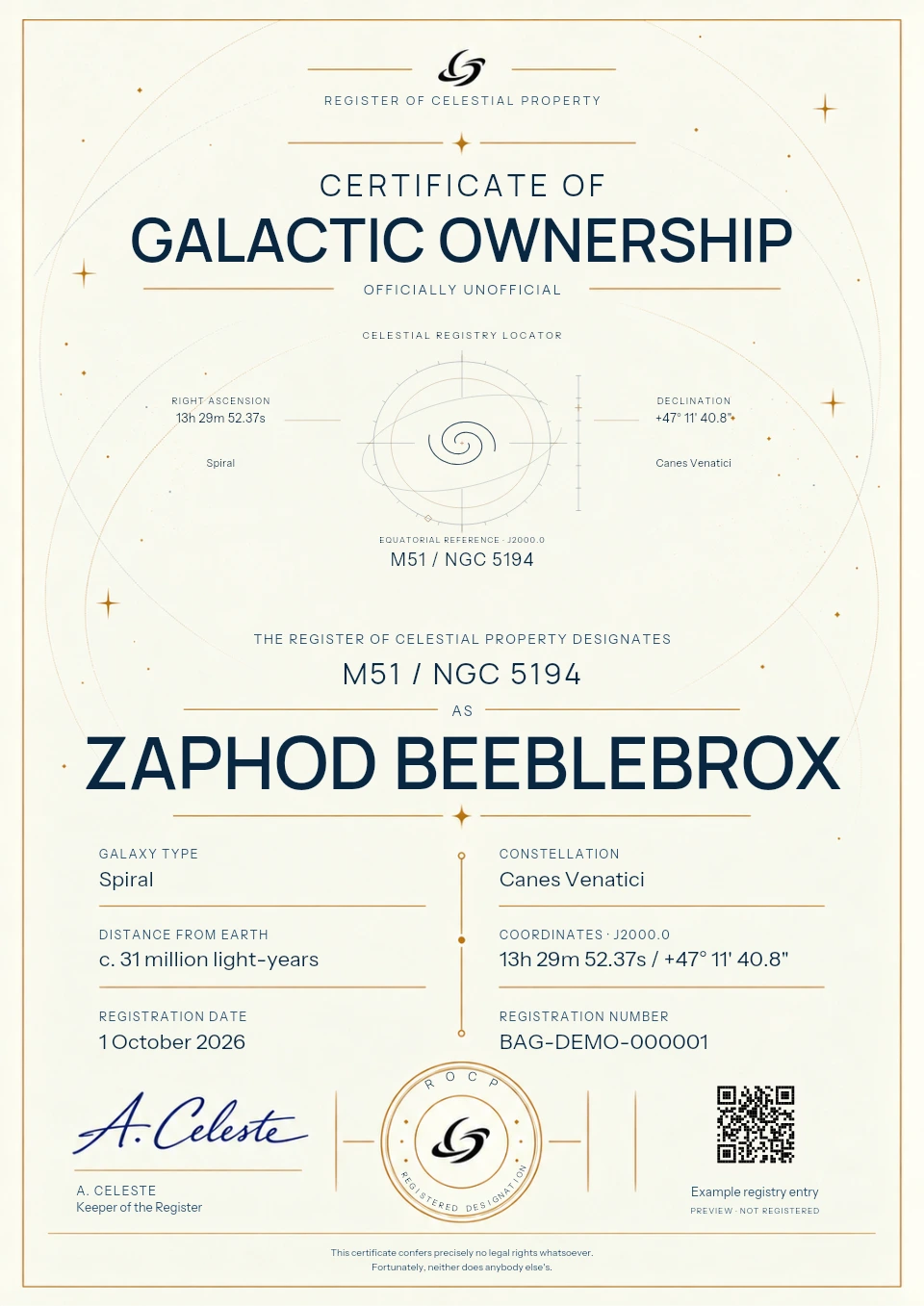
A matching commemorative certificate, with your registered name, object designation, registration number and QR link to its registry record.
Digital copy in every package. Printed editions also include an A4 physical certificate.
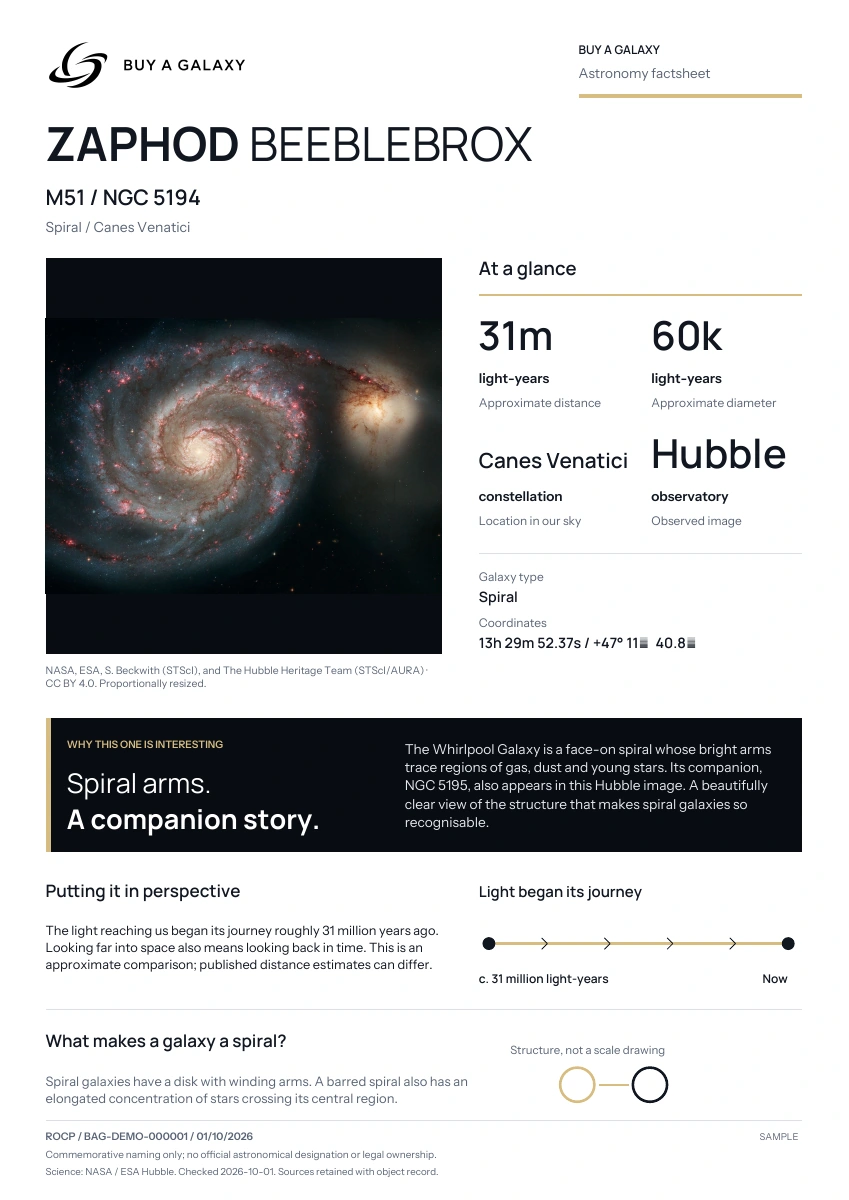
A personalised, single-page guide to your galaxy: interesting science, key measurements and the distinction between known facts and artistic interpretation.
Digital copy in every package; a printed sheet in Printed Editions.

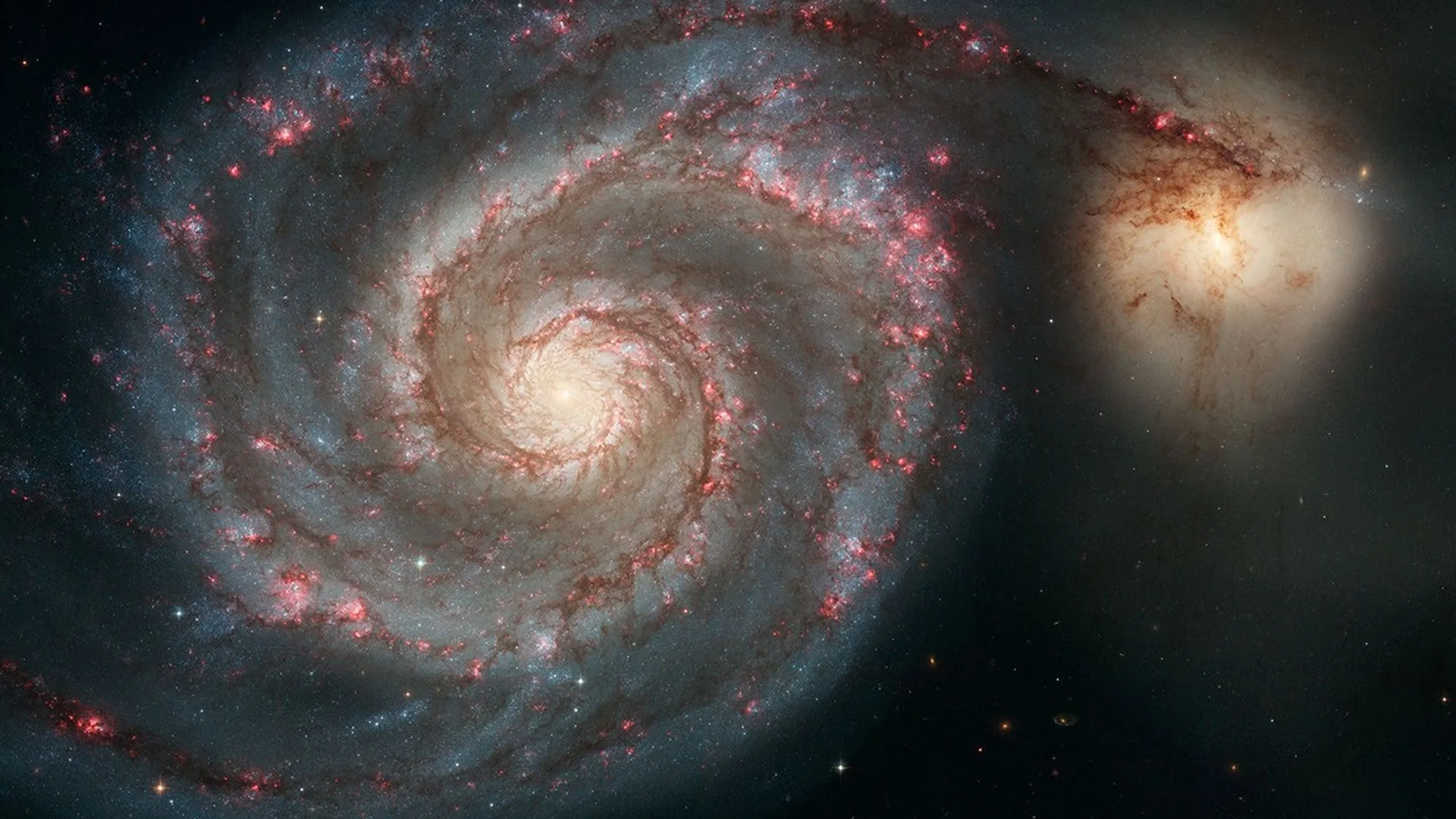
Your galaxy artwork, given room to breathe. Clean, text-free wallpapers for 1920 × 1080, 2560 × 1440 and 3840 × 2160 displays. Included in every digital pack.
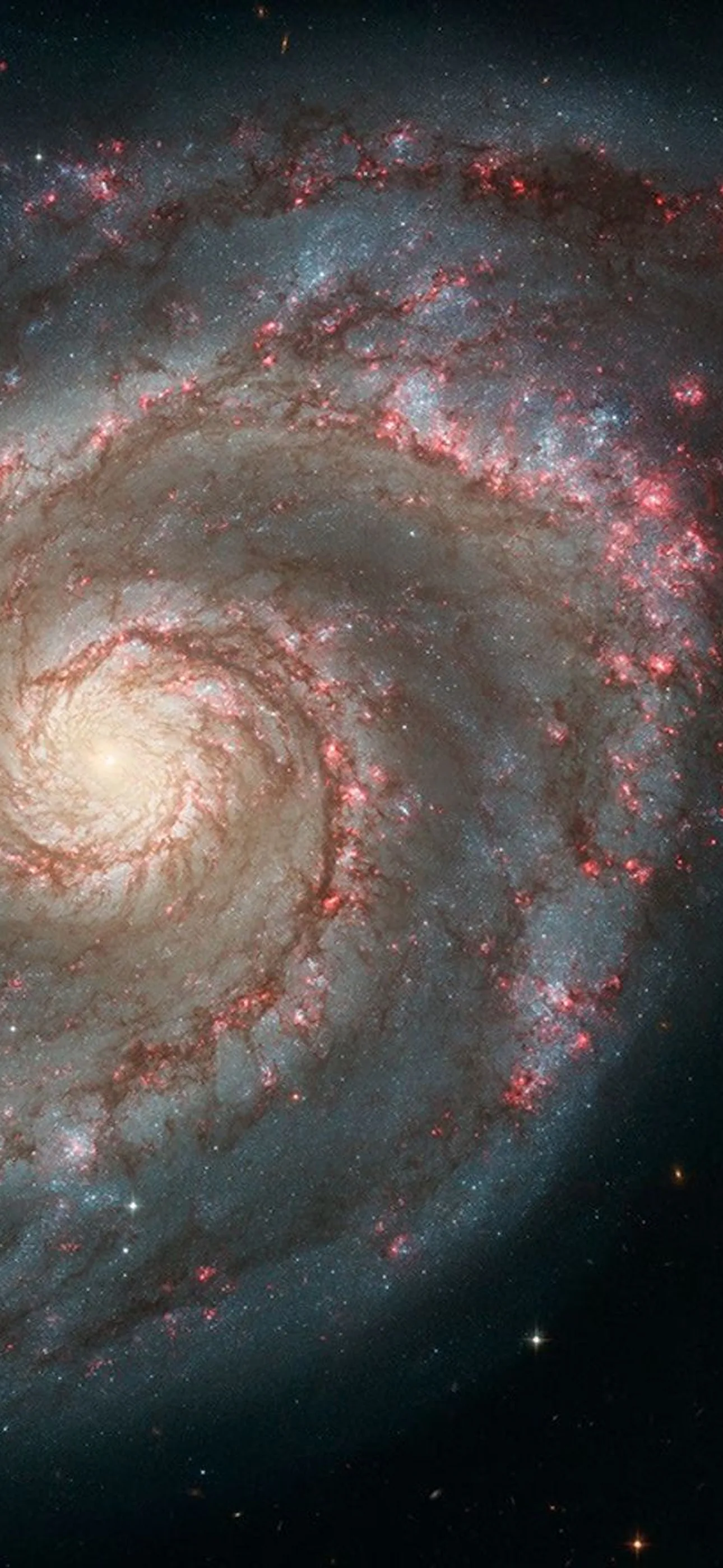
Dedicated portrait compositions with space around the clock and widgets. Supplied at 1290 × 2796 and 1440 × 3200, using the same celestial artwork as your gift.
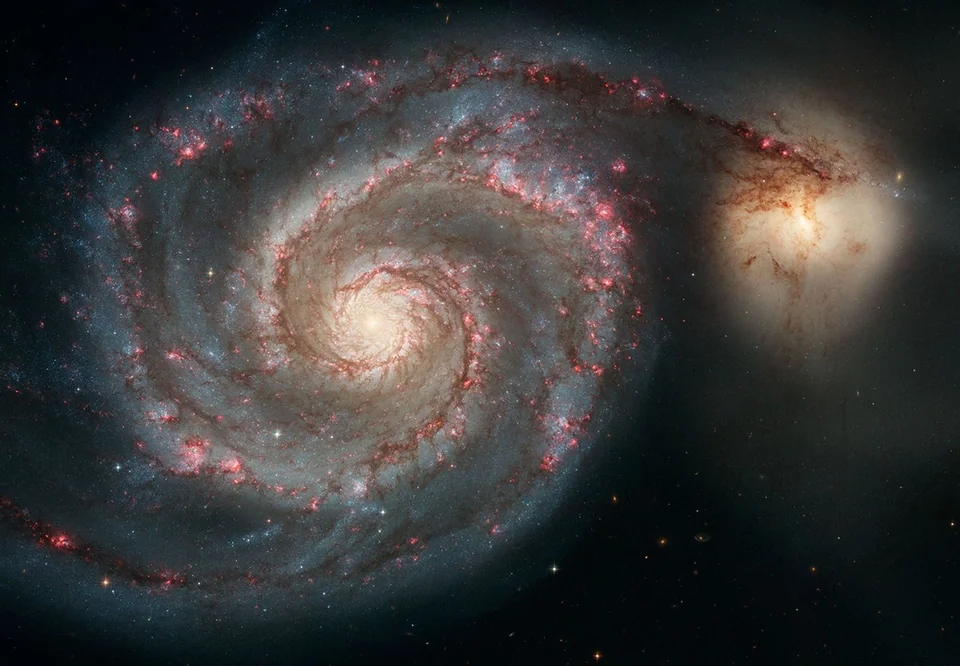 REGISTER OF CELESTIAL PROPERTYIllustrative record
M51 / NGC 5194
Your certificate’s QR code links to a lasting digital record of the registration.
Catalogue records are private. Pick Your Own records can be public or unlisted, according to your selection. Contact and billing details stay private.
Every package includes your personalised digital artwork, certificate, factsheet and wallpapers. Printed editions also include the professionally produced physical artwork and certificate.
Illustrative examples. Gallery Edition framed presentation is coming soon.
NGC 3344’s orientation gives a remarkably detailed view into its winding arms. A small stellar bar passes through the nucleus, making this a weakly barred spiral. It lies about 20 million light-years away in Leo Minor.
Hubble’s WFC3 observations span ultraviolet, visible and near-infrared wavelengths. Blue young stars, red-emitting gas and dark dust lanes reveal different parts of the galaxy’s inner structure. This is genuine observational imagery with scientific colour mapping.
The brilliant spiked stars in this frame are inside our own Milky Way, much closer than NGC 3344. They are not the galaxy’s nucleus or companion galaxies. Even Hubble occasionally has to work around a photobomber.
This high-resolution frame covers the inner spiral rather than the entire galaxy. The optical size estimate uses its catalogue angular extent and the adopted distance; a galaxy’s faint outskirts do not have a single sharp boundary.
Checked 1 October 2026. The source organisations do not endorse this gift.