A milestone in the search
Announced in 2014, Kepler-186 f was the first validated Earth-sized planet found in another star’s habitable zone. Its radius is about 1.17 times Earth’s. Similar size does not establish an Earth-like environment.

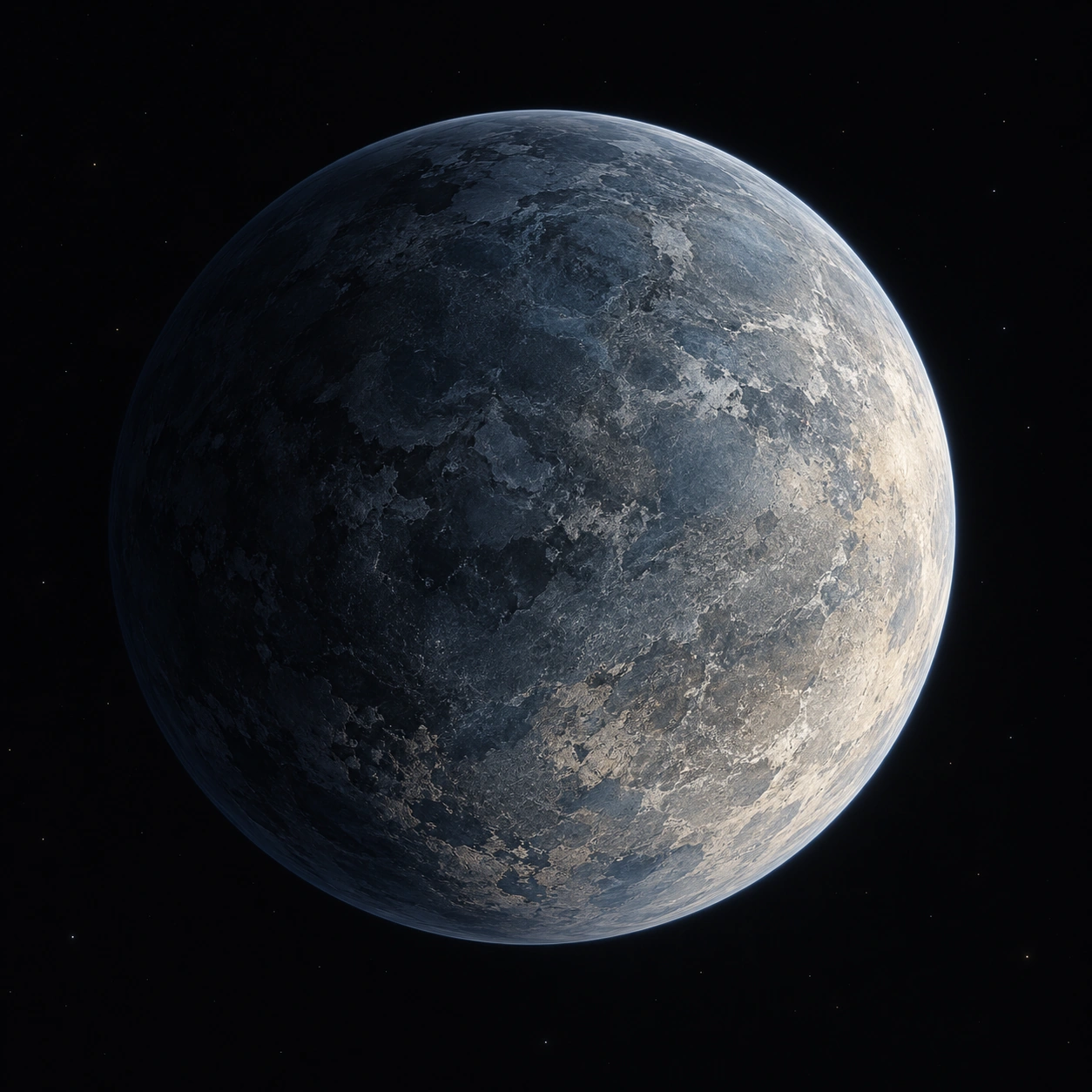
Buy A Galaxy · original commissioned reconstruction
Artist's Reconstruction · View astronomy source
Artist's ReconstructionFull image credit, source & interpretation
Artist's reconstruction based on published astronomical observations and current scientific understanding.
Official catalogue designation: Kepler-186 f
Your name for it: Planet Brenda
An Earth-sized world near the outer part of its red dwarf’s habitable zone. Its size and orbit are known; its atmosphere, surface and actual living conditions remain open questions.
Values are rounded estimates and may be refined by further observations. Personal names remain ceremonial.
Claim This PlanetA personalised planet gift preview. No order or reservation is made.
A3 poster + A4 printed certificate. Information sheet included.
Paper sizes shown in proportion. Tap either piece to inspect your personalisation.
Live preview · your selected galaxy and personalisation.
Registration number is a demonstration, not a saved registry entry. Artwork image credit
Values are rounded from published catalogue measurements. Sky coordinates identify the host system, not a resolved planetary surface.
Announced in 2014, Kepler-186 f was the first validated Earth-sized planet found in another star’s habitable zone. Its radius is about 1.17 times Earth’s. Similar size does not establish an Earth-like environment.
The term describes a range of stellar illumination where liquid surface water could be possible under suitable atmospheric conditions. It is not a detection of water, a climate measurement or a statement that anyone lives there.
The planet takes about 129.9 days to orbit its M-type red dwarf. The host system lies in Cygnus, roughly 580 light-years away using the NASA archive’s current distance estimate.
There is no confirmed surface map or atmosphere for this planet. Its mass has not been directly measured; model estimates based on radius should not be mistaken for a weighed world. The print keeps to the measured size and orbital information.
We have chosen a cool mineral globe, angled illumination and quiet space around it. Rock textures, a faint limb and the muted palette are artistic choices representing one possible appearance. They do not imply oceans, life or a measured atmosphere.
A personal dedication shares the print with Kepler-186 f’s scientific identity. The gift records a commemorative naming, leaving the research catalogues and any hypothetical inhabitants entirely undisturbed.
Checked 1 October 2026. The source organisations do not endorse this gift.
 Hot Jupiter
A blue planet. Almost nothing like home.
 Ultra-hot Jupiter
An excellent choice for someone who likes it warm.
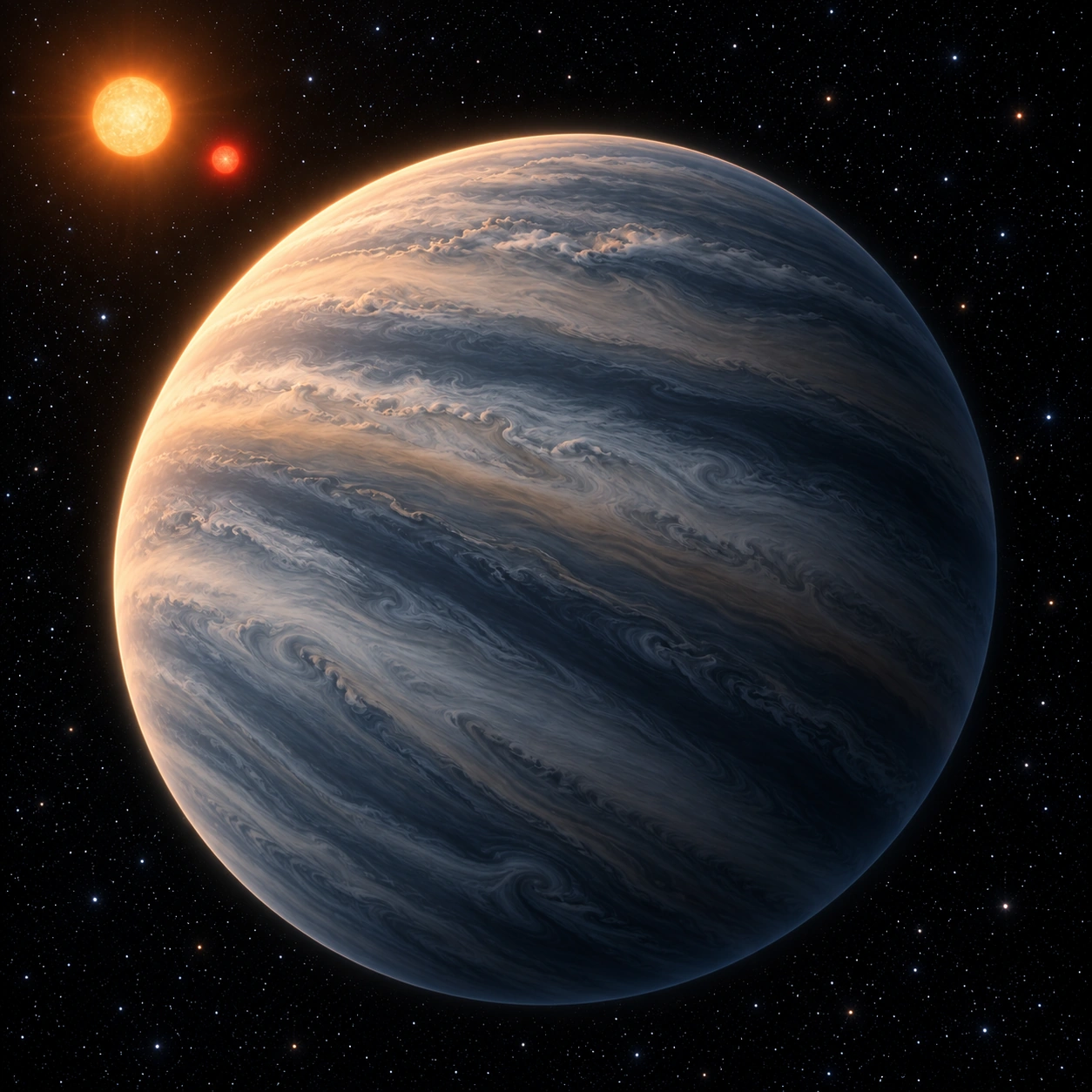 Circumbinary gas giant
Two suns included. Energy bills remain theoretical.