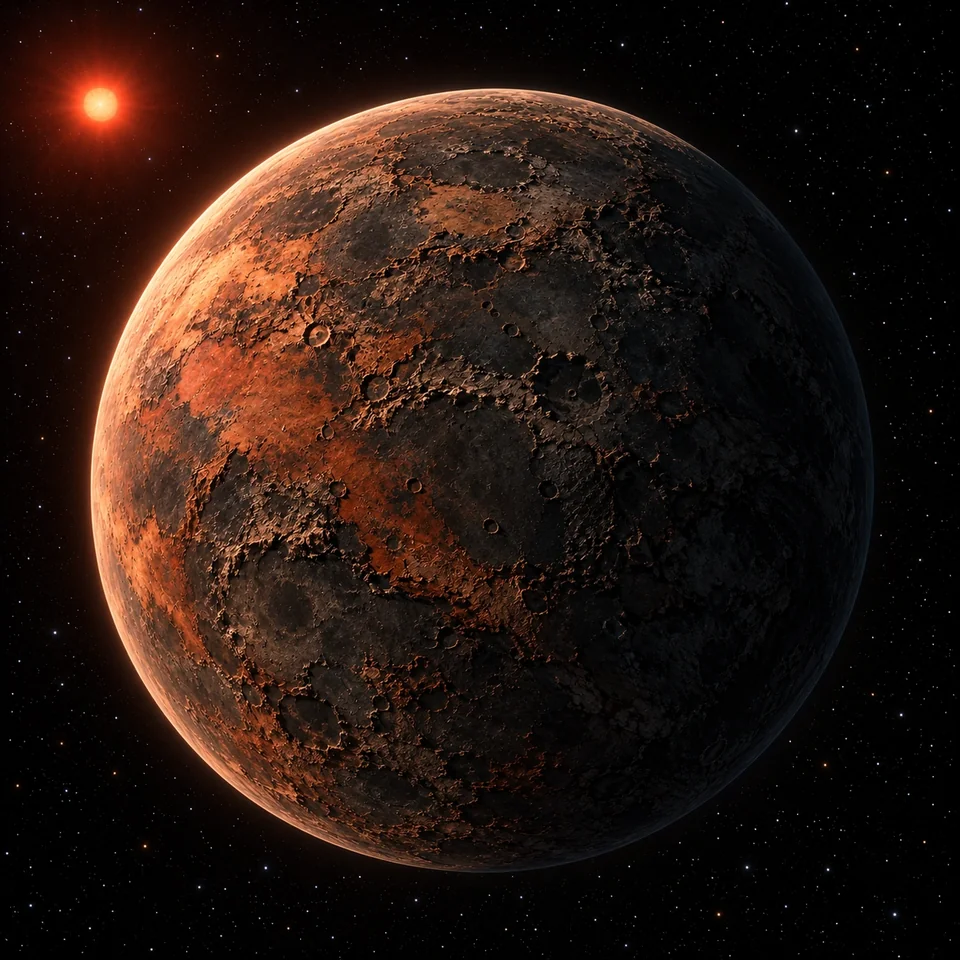
TRAPPIST-1 e · scientifically informed planet artist interpretation
Back to the curated collectionPICK YOUR OWN · BESPOKE ARTWORK

CHOOSE YOUR
PLANET

Pick an available exoplanet and we’ll create bespoke artwork specifically for your chosen world. Once claimed, it leaves the available register.

Astronomical sovereignty remains somewhat untested.

Bespoke artwork +£8 above catalogue pricing

Select an object’s name or View object page to explore its astronomical profile. Use Choose to personalise your gift. Browse all object pages ↗

Checking current availability…

GJ 367 bGJ 367 b · Hot terrestrial planet · · c. 30.7 light-yearsA tiny, dense world smaller than Earth, circling a nearby red dwarf in under eight hours.Details

A tiny, dense world smaller than Earth, circling a nearby red dwarf in under eight hours. It orbits GJ 367 every 0.322 days and lies approximately 30.7 light-years from Earth.

Type
Hot terrestrial planet
Constellation
Distance
c. 30.7 light-years
Host star
GJ 367
Orbital period
0.322 days
Radius
0.736 R⊕
Mass
0.503 M⊕
Distinguishing features
First identified in 2021 by transit. A tiny, dense world smaller than Earth, circling a nearby red dwarf in under eight hours. A compact rocky globe with a fiercely heated dayside is a plausible interpretation of this close-orbiting world. Its terrain and natural colour are not resolved; any cracks, glow or surface details would be artistic choices. Archive equilibrium-temperature estimate: 1.33e+03 K. This model estimate is not a measured surface temperature.

What it might look like

A small, dense rocky globe with an intensely heated dayside and a sharply shadowed edge.

Artwork character

Stone · graphite · warm ivory

Artistic direction, not a claim about observed colour.

Why we like it

An individual world with an extraordinary story, ready for your personal dedication.

Scientific references

Published measurements are rounded. Colour palettes describe artistic direction.

Choose this planet
Kepler-37 bKepler-37 b · Sub-Earth · · c. 208 light-yearsA remarkably small world, only slightly larger than our Moon, in a close orbit around a Sun-like star.Details

A remarkably small world, only slightly larger than our Moon, in a close orbit around a Sun-like star. It orbits Kepler-37 every 13.4 days and lies approximately 208 light-years from Earth.

Type
Sub-Earth
Constellation
Distance
c. 208 light-years
Host star
Kepler-37
Orbital period
13.4 days
Radius
0.31 R⊕
Mass
< 0.79 M⊕
Distinguishing features
First identified in 2013 by transit. A remarkably small world, only slightly larger than our Moon, in a close orbit around a Sun-like star. Its small size and hot orbit suggest a compact rocky world, potentially without a substantial atmosphere. A bare, starlit globe is plausible, but its surface features and natural colour are unknown. Archive equilibrium-temperature estimate: 718 K. This model estimate is not a measured surface temperature.

What it might look like

A tiny rocky globe, with a bare-looking exterior catching strong starlight.

Artwork character

Slate · charcoal · warm cream

Artistic direction, not a claim about observed colour.

Why we like it

An individual world with an extraordinary story, ready for your personal dedication.

Scientific references

Published measurements are rounded. Colour palettes describe artistic direction.

Choose this planet
Kepler-36 bKepler-36 b · Super-Earth · · c. 1.72e+03 light-yearsThe smaller member of a famous planetary odd couple: a dense super-Earth with a much larger neighbour unusually close by.Details

The smaller member of a famous planetary odd couple: a dense super-Earth with a much larger neighbour unusually close by. It orbits Kepler-36 every 13.9 days and lies approximately 1.72e+03 light-years from Earth.

Type
Super-Earth
Constellation
Distance
c. 1.72e+03 light-years
Host star
Kepler-36
Orbital period
13.9 days
Radius
1.5 R⊕
Mass
3.83 M⊕
Distinguishing features
First identified in 2012 by transit. The smaller member of a famous planetary odd couple: a dense super-Earth with a much larger neighbour unusually close by. A rocky globe is consistent with this planet's bulk density. Its nearby neighbour could make an extraordinary setting, but the ground, sky and natural colours have not been imaged. Archive equilibrium-temperature estimate: 978 K. This model estimate is not a measured surface temperature.

What it might look like

A dense rocky globe with mineral textures, set in a system with an unusually close planetary neighbour.

Artwork character

Amber · graphite · warm cream

Artistic direction, not a claim about observed colour.

Why we like it

An individual world with an extraordinary story, ready for your personal dedication.

Scientific references

Published measurements are rounded. Colour palettes describe artistic direction.

Choose this planet
Kepler-36 cKepler-36 c · Sub-Neptune · · c. 1.72e+03 light-yearsA low-density companion to Kepler-36 b, illustrating how dramatically two neighbouring worlds can differ.Details

A low-density companion to Kepler-36 b, illustrating how dramatically two neighbouring worlds can differ. It orbits Kepler-36 every 16.2 days and lies approximately 1.72e+03 light-years from Earth.

Type
Sub-Neptune
Constellation
Distance
c. 1.72e+03 light-years
Host star
Kepler-36
Orbital period
16.2 days
Radius
3.68 R⊕
Mass
7.13 M⊕
Distinguishing features
First identified in 2012 by transit. A low-density companion to Kepler-36 b, illustrating how dramatically two neighbouring worlds can differ. A substantial gaseous envelope could present a soft atmospheric edge rather than an exposed rocky surface. Cloud bands and colours remain speculative; this planet has no resolved portrait. Archive equilibrium-temperature estimate: 928 K. This model estimate is not a measured surface temperature.

What it might look like

A softly edged globe surrounded by a substantial gaseous envelope.

Artwork character

Stone · graphite · warm ivory

Artistic direction, not a claim about observed colour.

Why we like it

An individual world with an extraordinary story, ready for your personal dedication.

Scientific references

Published measurements are rounded. Colour palettes describe artistic direction.

Choose this planet
TOI-715 bTOI-715 b · Temperate super-Earth · · c. 138 light-yearsA super-Earth orbiting a red dwarf in its conservative habitable zone, an intriguing target for future study.Details

A super-Earth orbiting a red dwarf in its conservative habitable zone, an intriguing target for future study. It orbits TOI-715 every 19.3 days and lies approximately 138 light-years from Earth.

Type
Temperate super-Earth
Constellation
Distance
c. 138 light-years
Host star
TOI-715
Orbital period
19.3 days
Radius
1.55 R⊕
Mass
Not directly measured
Distinguishing features
First identified in 2023 by transit. A super-Earth orbiting a red dwarf in its conservative habitable zone, an intriguing target for future study. Possible atmospheres, clouds or exposed rock could produce very different views. Its habitable-zone orbit is not proof of oceans or life, and its surface, atmosphere and natural colour are unknown. Archive equilibrium-temperature estimate: 234 K. This model estimate is not a measured surface temperature.

What it might look like

A super-Earth beneath red-dwarf starlight, with a possible rocky exterior or light atmospheric veil.

Artwork character

Slate · charcoal · warm cream

Artistic direction, not a claim about observed colour.

Why we like it

An individual world with an extraordinary story, ready for your personal dedication.

Scientific references

Published measurements are rounded. Colour palettes describe artistic direction.

Choose this planet
TOI-1231 bTOI-1231 b · Temperate Neptune-sized planet · · c. 90.1 light-yearsA comparatively cool Neptune-sized world around a nearby red dwarf, well suited to atmospheric investigation.Details

A comparatively cool Neptune-sized world around a nearby red dwarf, well suited to atmospheric investigation. It orbits TOI-1231 every 24.2 days and lies approximately 90.1 light-years from Earth.

Type
Temperate Neptune-sized planet
Constellation
Distance
c. 90.1 light-years
Host star
TOI-1231
Orbital period
24.2 days
Radius
3.65 R⊕
Mass
15.4 M⊕
Distinguishing features
First identified in 2021 by transit. A comparatively cool Neptune-sized world around a nearby red dwarf, well suited to atmospheric investigation. A gaseous envelope might produce a rounded, hazy limb or cloud-covered exterior. Neither particular cloud patterns nor blue colour are established, and there is no resolved image of its atmosphere. Archive equilibrium-temperature estimate: 330 K. This model estimate is not a measured surface temperature.

What it might look like

A Neptune-sized globe with a rounded, hazy atmosphere and possible cloud layers.

Artwork character

Amber · graphite · warm cream

Artistic direction, not a claim about observed colour.

Why we like it

An individual world with an extraordinary story, ready for your personal dedication.

Scientific references

Published measurements are rounded. Colour palettes describe artistic direction.

Choose this planet
TOI-849 bTOI-849 b · Dense Neptune-sized planet · · c. 736 light-yearsAn unusually dense, fiercely irradiated world that may be an exposed giant-planet core.Details

An unusually dense, fiercely irradiated world that may be an exposed giant-planet core. It orbits TOI-849 every 0.766 days and lies approximately 736 light-years from Earth.

Type
Dense Neptune-sized planet
Constellation
Distance
c. 736 light-years
Host star
TOI-849
Orbital period
0.766 days
Radius
3.64 R⊕
Mass
41.8 M⊕
Distinguishing features
First identified in 2020 by transit. An unusually dense, fiercely irradiated world that may be an exposed giant-planet core. One interpretation is a largely stripped core rather than a familiar cloud-covered giant. A bare, intensely illuminated world is possible, but the core interpretation, surface and natural colour are not directly imaged. Archive equilibrium-temperature estimate: 1.93e+03 K. This model estimate is not a measured surface temperature.

What it might look like

A strongly illuminated, dense world that may be the exposed core of a former gas giant.

Artwork character

Stone · graphite · warm ivory

Artistic direction, not a claim about observed colour.

Why we like it

An individual world with an extraordinary story, ready for your personal dedication.

Scientific references

Published measurements are rounded. Colour palettes describe artistic direction.

Choose this planet
WASP-127 bWASP-127 b · Inflated hot gas giant · · c. 520 light-yearsA very low-density giant with a broad atmosphere and a short, four-day orbit.Details

A very low-density giant with a broad atmosphere and a short, four-day orbit. It orbits WASP-127 every 4.18 days and lies approximately 520 light-years from Earth.

Type
Inflated hot gas giant
Constellation
Distance
c. 520 light-years
Host star
WASP-127
Orbital period
4.18 days
Radius
14.7 R⊕
Mass
52.3 M⊕
Distinguishing features
First identified in 2016 by transit. A very low-density giant with a broad atmosphere and a short, four-day orbit. Its extended atmosphere could give the globe a soft, prominent limb. Flowing clouds are an artistic possibility, but detailed weather patterns and natural colour have not been resolved. Archive equilibrium-temperature estimate: 1.4e+03 K. This model estimate is not a measured surface temperature.

What it might look like

A puffy gas giant with a broad atmospheric edge and softly flowing cloud layers.

Artwork character

Slate · charcoal · warm cream

Artistic direction, not a claim about observed colour.

Why we like it

An individual world with an extraordinary story, ready for your personal dedication.

Scientific references

Published measurements are rounded. Colour palettes describe artistic direction.

Choose this planet
WASP-17 bWASP-17 b · Puffy hot Jupiter · · c. 1.32e+03 light-yearsA huge, low-density hot Jupiter whose high-altitude clouds show evidence for quartz nanocrystals.Details

A huge, low-density hot Jupiter whose high-altitude clouds show evidence for quartz nanocrystals. It orbits WASP-17 every 3.74 days and lies approximately 1.32e+03 light-years from Earth.

Type
Puffy hot Jupiter
Constellation
Distance
c. 1.32e+03 light-years
Host star
WASP-17
Orbital period
3.74 days
Radius
21 R⊕
Mass
248 M⊕
Distinguishing features
First identified in 2009 by transit. A huge, low-density hot Jupiter whose high-altitude clouds show evidence for quartz nanocrystals. Webb's quartz-cloud evidence supports a high-altitude haze of tiny mineral particles. A luminous, misty cloudscape is plausible; visible crystal shards, specific colours and detailed storm patterns would be imaginative rather than observed. Archive equilibrium-temperature estimate: 1.76e+03 K. This model estimate is not a measured surface temperature.

What it might look like

A luminous gas giant wrapped in fine mineral haze, informed by evidence for high-altitude quartz clouds.

Artwork character

Amber · graphite · warm cream

Artistic direction, not a claim about observed colour.

Why we like it

An individual world with an extraordinary story, ready for your personal dedication.

Scientific references

Published measurements are rounded. Colour palettes describe artistic direction.

Choose this planet
HD 80606 bHD 80606 b · Eccentric gas giant · · c. 217 light-yearsA massive giant on an extraordinarily stretched orbit, experiencing dramatic heating near its star.Details

A massive giant on an extraordinarily stretched orbit, experiencing dramatic heating near its star. It orbits HD 80606 every 111 days and lies approximately 217 light-years from Earth.

Type
Eccentric gas giant
Constellation
Distance
c. 217 light-years
Host star
HD 80606
Orbital period
111 days
Radius
11.6 R⊕
Mass
1.32e+03 M⊕
Distinguishing features
First identified in 2001 by radial velocity. A massive giant on an extraordinarily stretched orbit, experiencing dramatic heating near its star. Its extreme changes in irradiation could drive dramatic atmospheric changes. A stormy giant with contrasting illuminated and dark hemispheres is plausible, while exact cloud structures and natural colour remain unknown. Archive equilibrium-temperature estimate: 405 K. This model estimate is not a measured surface temperature.

What it might look like

A turbulent gas giant with dramatic light and shadow, reflecting its extreme swings in stellar heating.

Artwork character

Stone · graphite · warm ivory

Artistic direction, not a claim about observed colour.

Why we like it

An individual world with an extraordinary story, ready for your personal dedication.

Scientific references

Published measurements are rounded. Colour palettes describe artistic direction.

Choose this planet
Kepler-413 bKepler-413 b · Circumbinary gas planet · · c. 2.76e+03 light-yearsA world orbiting two stars on a tilted, precessing path: an unusually wobbly planetary system.Details

A world orbiting two stars on a tilted, precessing path: an unusually wobbly planetary system. It orbits Kepler-413 every 66.3 days and lies approximately 2.76e+03 light-years from Earth.

Type
Circumbinary gas planet
Constellation
Distance
c. 2.76e+03 light-years
Host star
Kepler-413
Orbital period
66.3 days
Radius
4.35 R⊕
Mass
67 M⊕
Distinguishing features
First identified in 2014 by transit. A world orbiting two stars on a tilted, precessing path: an unusually wobbly planetary system. A gaseous globe lit by two stars offers a striking scientifically grounded setting. Its cloud cover, colour and atmospheric details remain unknown; a twin-star composition is an illustration, not a photograph. Archive equilibrium-temperature estimate: 335 K. This model estimate is not a measured surface temperature.

What it might look like

A gaseous globe illuminated by two stars, with a softly layered atmospheric edge.

Artwork character

Slate · charcoal · warm cream

Artistic direction, not a claim about observed colour.

Why we like it

An individual world with an extraordinary story, ready for your personal dedication.

Scientific references

Published measurements are rounded. Colour palettes describe artistic direction.

Choose this planet
Kepler-453 bKepler-453 b · Circumbinary Neptune-sized planet · · c. 1.44e+03 light-yearsA large world circling a pair of stars, completing its orbit in about 241 Earth days.Details

A large world circling a pair of stars, completing its orbit in about 241 Earth days. It orbits Kepler-453 every 241 days and lies approximately 1.44e+03 light-years from Earth.

Type
Circumbinary Neptune-sized planet
Constellation
Distance
c. 1.44e+03 light-years
Host star
Kepler-453
Orbital period
241 days
Radius
6.2 R⊕
Mass
< 16 M⊕
Distinguishing features
First identified in 2015 by transit. A large world circling a pair of stars, completing its orbit in about 241 Earth days. Two stars could illuminate an atmospheric globe from a changing sky. No resolved image establishes its clouds, surface or natural colour, and its size does not make it an Earth-like habitable world. Archive equilibrium-temperature estimate: 274 K. This model estimate is not a measured surface temperature.

What it might look like

An atmospheric globe beneath a twin-star sky, with shifting light across its curved edge.

Artwork character

Amber · graphite · warm cream

Artistic direction, not a claim about observed colour.

Why we like it

An individual world with an extraordinary story, ready for your personal dedication.

Scientific references

Published measurements are rounded. Colour palettes describe artistic direction.

Choose this planet
HD 110067 bHD 110067 b · Sub-Neptune · · c. 105 light-yearsThe innermost world in a remarkable six-planet system whose orbital rhythms form a resonant chain.Details

The innermost world in a remarkable six-planet system whose orbital rhythms form a resonant chain. It orbits HD 110067 every 9.11 days and lies approximately 105 light-years from Earth.

Type
Sub-Neptune
Constellation
Distance
c. 105 light-years
Host star
HD 110067
Orbital period
9.11 days
Radius
2.2 R⊕
Mass
5.69 M⊕
Distinguishing features
First identified in 2023 by transit. The innermost world in a remarkable six-planet system whose orbital rhythms form a resonant chain. An atmospheric globe beneath warm starlight is a plausible interpretation of its size and orbit. Clouds, bands and natural colours are not measured, and its resonant neighbours are a system fact rather than resolved scenery. Archive equilibrium-temperature estimate: 800 K. This model estimate is not a measured surface temperature.

What it might look like

A sub-Neptune with a deep atmospheric envelope, illuminated by the warm light of its host star.

Artwork character

Stone · graphite · warm ivory

Artistic direction, not a claim about observed colour.

Why we like it

An individual world with an extraordinary story, ready for your personal dedication.

Scientific references

Published measurements are rounded. Colour palettes describe artistic direction.

Choose this planet
HD 110067 fHD 110067 f · Sub-Neptune · · c. 105 light-yearsAn outer member of HD 110067's six-world resonant chain, with a year lasting about 41 days.Details

An outer member of HD 110067's six-world resonant chain, with a year lasting about 41 days. It orbits HD 110067 every 41.1 days and lies approximately 105 light-years from Earth.

Type
Sub-Neptune
Constellation
Distance
c. 105 light-years
Host star
HD 110067
Orbital period
41.1 days
Radius
2.6 R⊕
Mass
5.04 M⊕
Distinguishing features
First identified in 2023 by transit. An outer member of HD 110067's six-world resonant chain, with a year lasting about 41 days. A gaseous exterior with a gently hazy edge is possible, but its atmosphere has no resolved portrait. Specific cloud patterns and colours are speculative rather than known properties. Archive equilibrium-temperature estimate: 489 K. This model estimate is not a measured surface temperature.

What it might look like

A gently hazy gas world, the outer member of a remarkably orderly six-planet system.

Artwork character

Slate · charcoal · warm cream

Artistic direction, not a claim about observed colour.

Why we like it

An individual world with an extraordinary story, ready for your personal dedication.

Scientific references

Published measurements are rounded. Colour palettes describe artistic direction.

Choose this planet
TOI-178 bTOI-178 b · Small hot planet · · c. 204 light-yearsA compact inner world in a six-planet system renowned for its intricate orbital architecture.Details

A compact inner world in a six-planet system renowned for its intricate orbital architecture. It orbits TOI-178 every 1.91 days and lies approximately 204 light-years from Earth.

Type
Small hot planet
Constellation
Distance
c. 204 light-years
Host star
TOI-178
Orbital period
1.91 days
Radius
1.2 R⊕
Mass
0.96 M⊕
Distinguishing features
First identified in 2021 by transit. A compact inner world in a six-planet system renowned for its intricate orbital architecture. Its small radius permits a rocky-world interpretation, while its very short orbit suggests intense illumination. Surface details, atmospheric presence and natural colour remain uncertain and unpictured. Archive equilibrium-temperature estimate: 1.04e+03 K. This model estimate is not a measured surface temperature.

What it might look like

A small, strongly illuminated globe with a possible rocky exterior and sharp light-to-shadow contrast.

Artwork character

Amber · graphite · warm cream

Artistic direction, not a claim about observed colour.

Why we like it

An individual world with an extraordinary story, ready for your personal dedication.

Scientific references

Published measurements are rounded. Colour palettes describe artistic direction.

Choose this planet
TOI-178 fTOI-178 f · Sub-Neptune · · c. 204 light-yearsA larger outer world in TOI-178's remarkable resonant planetary chain, circling its star every fifteen days.Details

A larger outer world in TOI-178's remarkable resonant planetary chain, circling its star every fifteen days. It orbits TOI-178 every 15.2 days and lies approximately 204 light-years from Earth.

Type
Sub-Neptune
Constellation
Distance
c. 204 light-years
Host star
TOI-178
Orbital period
15.2 days
Radius
2.42 R⊕
Mass
5.63 M⊕
Distinguishing features
First identified in 2021 by transit. A larger outer world in TOI-178's remarkable resonant planetary chain, circling its star every fifteen days. A volatile-rich envelope could produce an atmospheric rather than rocky-looking exterior. Cloud shapes, colour and any visible surface are not established by the available data. Archive equilibrium-temperature estimate: 521 K. This model estimate is not a measured surface temperature.

What it might look like

An atmospheric globe with a softly layered exterior, consistent with its low bulk density.

Artwork character

Stone · graphite · warm ivory

Artistic direction, not a claim about observed colour.

Why we like it

An individual world with an extraordinary story, ready for your personal dedication.

Scientific references

Published measurements are rounded. Colour palettes describe artistic direction.

Choose this planet
K2-138 fK2-138 f · Sub-Neptune-sized planet · · c. 661 light-yearsA world in a tightly choreographed multi-planet system first uncovered with the help of citizen scientists.Details

A world in a tightly choreographed multi-planet system first uncovered with the help of citizen scientists. It orbits K2-138 every 12.8 days and lies approximately 661 light-years from Earth.

Type
Sub-Neptune-sized planet
Constellation
Distance
c. 661 light-years
Host star
K2-138
Orbital period
12.8 days
Radius
2.9 R⊕
Mass
1.63 M⊕
Distinguishing features
First identified in 2017 by transit. A world in a tightly choreographed multi-planet system first uncovered with the help of citizen scientists. Its nearly three-Earth-radius size suggests an atmospheric envelope may be important. A softly edged, clouded globe is possible, but its low and uncertain mass does not establish composition, weather or natural colour. Archive equilibrium-temperature estimate: 653 K. This model estimate is not a measured surface temperature.

What it might look like

A sub-Neptune with a possible gaseous envelope and a softly edged, clouded outline.

Artwork character

Slate · charcoal · warm cream

Artistic direction, not a claim about observed colour.

Why we like it

An individual world with an extraordinary story, ready for your personal dedication.

Scientific references

Published measurements are rounded. Colour palettes describe artistic direction.

Choose this planet
Kepler-1652 bKepler-1652 b · Super-Earth · · c. 822 light-yearsA small world around a red dwarf with a roughly 38-day orbit, an intriguing temperate-planet candidate for comparison.Details

A small world around a red dwarf with a roughly 38-day orbit, an intriguing temperate-planet candidate for comparison. It orbits Kepler-1652 every 38.1 days and lies approximately 822 light-years from Earth.

Type
Super-Earth
Constellation
Distance
c. 822 light-years
Host star
Kepler-1652
Orbital period
38.1 days
Radius
1.6 R⊕
Mass
Not directly measured
Distinguishing features
First identified in 2017 by transit. A small world around a red dwarf with a roughly 38-day orbit, an intriguing temperate-planet candidate for comparison. An atmosphere, exposed rock or a different volatile-rich exterior could each produce a distinct appearance. No oceans, land, clouds or natural colour have been confirmed; a temperate interpretation does not establish habitability. Archive equilibrium-temperature estimate: 268 K. This model estimate is not a measured surface temperature.

What it might look like

A super-Earth beneath red-dwarf starlight, with a possible rocky exterior or atmospheric veil.

Artwork character

Amber · graphite · warm cream

Artistic direction, not a claim about observed colour.

Why we like it

An individual world with an extraordinary story, ready for your personal dedication.

Scientific references

Published measurements are rounded. Colour palettes describe artistic direction.

Choose this planet
TOI-1266 cTOI-1266 c · Small volatile-rich planet · · c. 117 light-yearsA roughly two-Earth-radius world in a compact red-dwarf system, with interior models allowing more than one interpretation.Details

A roughly two-Earth-radius world in a compact red-dwarf system, with interior models allowing more than one interpretation. It orbits TOI-1266 every 18.8 days and lies approximately 117 light-years from Earth.

Type
Small volatile-rich planet
Constellation
Distance
c. 117 light-years
Host star
TOI-1266
Orbital period
18.8 days
Radius
1.98 R⊕
Mass
3.17 M⊕
Distinguishing features
First identified in 2020 by transit. A roughly two-Earth-radius world in a compact red-dwarf system, with interior models allowing more than one interpretation. Current bulk measurements can fit either a hydrogen-rich or water-rich envelope. A hazy atmospheric globe is plausible, while an exposed ocean, exact clouds and natural colour are not confirmed. Archive equilibrium-temperature estimate: 346 K. This model estimate is not a measured surface temperature.

What it might look like

A softly hazy globe, consistent with a hydrogen-rich or water-rich atmospheric envelope.

Artwork character

Stone · graphite · warm ivory

Artistic direction, not a claim about observed colour.

Why we like it

An individual world with an extraordinary story, ready for your personal dedication.

Scientific references

Published measurements are rounded. Colour palettes describe artistic direction.

Choose this planet
TOI-421 bTOI-421 b · Hot sub-Neptune · · c. 244 light-yearsA hot sub-Neptune whose relatively clear atmosphere has revealed molecular clues to Webb.Details

A hot sub-Neptune whose relatively clear atmosphere has revealed molecular clues to Webb. It orbits TOI-421 every 5.2 days and lies approximately 244 light-years from Earth.

Type
Hot sub-Neptune
Constellation
Distance
c. 244 light-years
Host star
TOI-421
Orbital period
5.2 days
Radius
2.64 R⊕
Mass
6.7 M⊕
Distinguishing features
First identified in 2020 by transit. A hot sub-Neptune whose relatively clear atmosphere has revealed molecular clues to Webb. Webb data favour a comparatively clear, hydrogen-rich atmosphere rather than the thick haze seen around many sub-Neptunes. Its natural colour and detailed atmospheric appearance remain unresolved; clear does not mean an exposed rocky surface. Archive equilibrium-temperature estimate: 922 K. This model estimate is not a measured surface temperature.

What it might look like

A hot sub-Neptune with a relatively clear atmospheric edge and light filtering through a hydrogen-rich envelope.

Artwork character

Slate · charcoal · warm cream

Artistic direction, not a claim about observed colour.

Why we like it

An individual world with an extraordinary story, ready for your personal dedication.

Scientific references

Published measurements are rounded. Colour palettes describe artistic direction.

Choose this planet
GJ 1132 bGJ 1132 b · Rocky · Vela · c. 41.1 light-yearsGJ 1132 b orbits GJ 1132 every 1.63 days.Details

GJ 1132 b orbits GJ 1132 every 1.63 days. Its radius is about 1.19 times Earth's, and the host system is 41.1 light-years away.

Type
Rocky
Constellation
Vela
Distance
c. 41.1 light-years
Host star
GJ 1132
Orbital period
1.63 days
Radius
1.19 R⊕
Mass
1.84 M⊕
Distinguishing features
First identified in 2015 by transit. The archive lists 2 confirmed planets in this host system. The archive reports a planet mass of 1.84 Earth masses. Archive equilibrium-temperature estimate: 584 K. This model value is not a measured surface temperature.

What it might look like

A compact rocky globe, with muted mineral textures and a sharply lit curve against deep space.

Artwork character

Stone · graphite · warm ivory

Artistic direction, not a claim about observed colour.

Why we like it

Small enough to feel familiar. The rest requires imagination.

Scientific references

Published measurements are rounded. Colour palettes describe artistic direction.

Choose this planet
GJ 3470 bGJ 3470 b · Neptune-like · Cancer · c. 96.0 light-yearsGJ 3470 b orbits GJ 3470 every 3.34 days.Details

GJ 3470 b orbits GJ 3470 every 3.34 days. Its radius is about 4.57 times Earth's, and the host system is 96 light-years away.

Type
Neptune-like
Constellation
Cancer
Distance
c. 96.0 light-years
Host star
GJ 3470
Orbital period
3.34 days
Radius
4.57 R⊕
Mass
13.9 M⊕
Distinguishing features
First identified in 2012 by radial velocity. The archive lists 1 confirmed planets in this host system. The archive reports a planet mass of 13.9 Earth masses. Archive equilibrium-temperature estimate: 594 K. This model value is not a measured surface temperature.

What it might look like

A curved atmospheric globe with delicate layers of cloud or haze and a softly shadowed edge.

Artwork character

Stone · graphite · warm cream

Artistic direction, not a claim about observed colour.

Why we like it

A large outline without the Jupiter-sized commitment.

Scientific references

Published measurements are rounded. Colour palettes describe artistic direction.

Choose this planet
GJ 357 bGJ 357 b · Rocky · Hydra · c. 30.8 light-yearsGJ 357 b orbits GJ 357 every 3.93 days.Details

GJ 357 b orbits GJ 357 every 3.93 days. Its radius is about 1.2 times Earth's, and the host system is 30.8 light-years away.

Type
Rocky
Constellation
Hydra
Distance
c. 30.8 light-years
Host star
GJ 357
Orbital period
3.93 days
Radius
1.2 R⊕
Mass
1.83 M⊕
Distinguishing features
First identified in 2019 by transit. The archive lists 3 confirmed planets in this host system. The archive reports a planet mass of 1.83 Earth masses. Archive equilibrium-temperature estimate: 518 K. This model value is not a measured surface temperature.

What it might look like

A compact globe with possible rocky textures, curved side lighting and deep shadows beneath its host star’s light.

Artwork character

Slate · charcoal · silver

Artistic direction, not a claim about observed colour.

Why we like it

A quick-orbit choice. A yearly subscription would be a terrible idea.

Scientific references

Published measurements are rounded. Colour palettes describe artistic direction.

Choose this planet
GJ 436 bGJ 436 b · Neptune-like · Leo · c. 31.8 light-yearsGJ 436 b orbits GJ 436 every 2.64 days.Details

GJ 436 b orbits GJ 436 every 2.64 days. Its radius is about 4.17 times Earth's, and the host system is 31.8 light-years away.

Type
Neptune-like
Constellation
Leo
Distance
c. 31.8 light-years
Host star
GJ 436
Orbital period
2.64 days
Radius
4.17 R⊕
Mass
22.1 M⊕
Distinguishing features
First identified in 2004 by radial velocity. The archive lists 1 confirmed planets in this host system. The archive reports a planet mass of 22.1 Earth masses. Archive equilibrium-temperature estimate: 686 K. This model value is not a measured surface temperature.

What it might look like

A curved atmospheric globe with delicate layers of cloud or haze and a softly shadowed edge.

Artwork character

Slate · deep blue · warm cream

Artistic direction, not a claim about observed colour.

Why we like it

For a nearby Neptune-sized selection and a decidedly short calendar.

Scientific references

Published measurements are rounded. Colour palettes describe artistic direction.

Choose this planet
GJ 486 bGJ 486 b · Rocky · Virgo · c. 26.3 light-yearsGJ 486 b orbits GJ 486 every 1.47 days.Details

GJ 486 b orbits GJ 486 every 1.47 days. Its radius is about 1.29 times Earth's, and the host system is 26.3 light-years away.

Type
Rocky
Constellation
Virgo
Distance
c. 26.3 light-years
Host star
GJ 486
Orbital period
1.47 days
Radius
1.29 R⊕
Mass
2.77 M⊕
Distinguishing features
First identified in 2021 by radial velocity. The archive lists 1 confirmed planets in this host system. The archive reports a planet mass of 2.77 Earth masses. Archive equilibrium-temperature estimate: 696 K. This model value is not a measured surface temperature.

What it might look like

A hot, rocky globe with rugged mineral textures and strong contrasts between starlight and shadow.

Artwork character

Amber · graphite · warm ivory

Artistic direction, not a claim about observed colour.

Why we like it

For the collector whose calendar already moves too fast.

Scientific references

Published measurements are rounded. Colour palettes describe artistic direction.

Choose this planet
HAT-P-11 bHAT-P-11 b · Neptune-like · Cygnus · c. 123.2 light-yearsHAT-P-11 b orbits HAT-P-11 every 4.89 days.Details

HAT-P-11 b orbits HAT-P-11 every 4.89 days. Its radius is about 4.36 times Earth's, and the host system is 123 light-years away.

Type
Neptune-like
Constellation
Cygnus
Distance
c. 123.2 light-years
Host star
HAT-P-11
Orbital period
4.89 days
Radius
4.36 R⊕
Mass
25 M⊕
Distinguishing features
First identified in 2010 by transit. The archive lists 2 confirmed planets in this host system. The archive reports a planet mass of 25 Earth masses. Archive equilibrium-temperature estimate: 838 K. This model value is not a measured surface temperature.

What it might look like

A curved atmospheric globe with delicate layers of cloud or haze and a softly shadowed edge.

Artwork character

Terracotta · charcoal · warm ivory

Artistic direction, not a claim about observed colour.

Why we like it

A Neptune-sized silhouette with no need to borrow Neptune’s identity.

Scientific references

Published measurements are rounded. Colour palettes describe artistic direction.

Choose this planet
HAT-P-26 bHAT-P-26 b · Neptune-like · Virgo · c. 462.6 light-yearsHAT-P-26 b orbits HAT-P-26 every 4.23 days.Details

HAT-P-26 b orbits HAT-P-26 every 4.23 days. Its radius is about 7.06 times Earth's, and the host system is 463 light-years away.

Type
Neptune-like
Constellation
Virgo
Distance
c. 462.6 light-years
Host star
HAT-P-26
Orbital period
4.23 days
Radius
7.06 R⊕
Mass
22.2 M⊕
Distinguishing features
First identified in 2010 by transit. The archive lists 1 confirmed planets in this host system. The archive reports a planet mass of 22.2 Earth masses. Archive equilibrium-temperature estimate: 1.08e+03 K. This model value is not a measured surface temperature.

What it might look like

A curved atmospheric globe with delicate layers of cloud or haze and a softly shadowed edge.

Artwork character

Rose · graphite · warm cream

Artistic direction, not a claim about observed colour.

Why we like it

A generously sized choice for someone who appreciates scale.

Scientific references

Published measurements are rounded. Colour palettes describe artistic direction.

Choose this planet
HD 15337 bHD 15337 b · Super-Earth · Fornax · c. 146.2 light-yearsHD 15337 b orbits HD 15337 every 4.76 days.Details

HD 15337 b orbits HD 15337 every 4.76 days. Its radius is about 1.77 times Earth's, and the host system is 146 light-years away.

Type
Super-Earth
Constellation
Fornax
Distance
c. 146.2 light-years
Host star
HD 15337
Orbital period
4.76 days
Radius
1.77 R⊕
Mass
6.52 M⊕
Distinguishing features
First identified in 2019 by transit. The archive lists 2 confirmed planets in this host system. The archive reports a planet mass of 6.52 Earth masses. Archive equilibrium-temperature estimate: 1e+03 K. This model value is not a measured surface temperature.

What it might look like

A substantial globe with a possible atmospheric veil and softly textured light-to-shadow boundary.

Artwork character

Stone · charcoal · warm cream

Artistic direction, not a claim about observed colour.

Why we like it

A compact, substantial option. No estate agent can improve the commute.

Scientific references

Published measurements are rounded. Colour palettes describe artistic direction.

Choose this planet
HD 15337 cHD 15337 c · Sub-Neptune · Fornax · c. 146.2 light-yearsHD 15337 c orbits HD 15337 every 17.2 days.Details

HD 15337 c orbits HD 15337 every 17.2 days. Its radius is about 2.53 times Earth's, and the host system is 146 light-years away.

Type
Sub-Neptune
Constellation
Fornax
Distance
c. 146.2 light-years
Host star
HD 15337
Orbital period
17.2 days
Radius
2.53 R⊕
Mass
6.79 M⊕
Distinguishing features
First identified in 2019 by transit. The archive lists 2 confirmed planets in this host system. The archive reports a planet mass of 6.79 Earth masses. Archive equilibrium-temperature estimate: 656 K. This model value is not a measured surface temperature.

What it might look like

A curved atmospheric globe with delicate layers of cloud or haze and a softly shadowed edge.

Artwork character

Stone · graphite · warm ivory

Artistic direction, not a claim about observed colour.

Why we like it

For those who appreciate a different-sized neighbour in the same system.

Scientific references

Published measurements are rounded. Colour palettes describe artistic direction.

Choose this planet
HD 207496 bHD 207496 b · Sub-Neptune · Octans · c. 77.0 light-yearsHD 207496 b orbits HD 207496 every 6.44 days.Details

HD 207496 b orbits HD 207496 every 6.44 days. Its radius is about 2.25 times Earth's, and the host system is 77 light-years away.

Type
Sub-Neptune
Constellation
Octans
Distance
c. 77.0 light-years
Host star
HD 207496
Orbital period
6.44 days
Radius
2.25 R⊕
Mass
6.1 M⊕
Distinguishing features
First identified in 2023 by transit. The archive lists 1 confirmed planets in this host system. The archive reports a planet mass of 6.1 Earth masses. Archive equilibrium-temperature estimate: 743 K. This model value is not a measured surface temperature.

What it might look like

A curved atmospheric globe with delicate layers of cloud or haze and a softly shadowed edge.

Artwork character

Stone · graphite · warm cream

Artistic direction, not a claim about observed colour.

Why we like it

A neat choice for someone who likes discovering less familiar names.

Scientific references

Published measurements are rounded. Colour palettes describe artistic direction.

Choose this planet
HD 209458 bHD 209458 b · Hot Jupiter · Pegasus · c. 157.5 light-yearsHD 209458 b orbits HD 209458 every 3.52 days.Details

HD 209458 b orbits HD 209458 every 3.52 days. Its radius is about 15.6 times Earth's, and the host system is 158 light-years away.

Type
Hot Jupiter
Constellation
Pegasus
Distance
c. 157.5 light-years
Host star
HD 209458
Orbital period
3.52 days
Radius
15.6 R⊕
Mass
232 M⊕
Distinguishing features
First identified in 1999 by radial velocity. The archive lists 1 confirmed planets in this host system. The archive reports a planet mass of 232 Earth masses. Archive equilibrium-temperature estimate: 1.46e+03 K. This model value is not a measured surface temperature.

What it might look like

A curved atmospheric globe with delicate layers of cloud or haze and a softly shadowed edge.

Artwork character

Slate · charcoal · silver

Artistic direction, not a claim about observed colour.

Why we like it

A classic giant. Tasteful understatement is optional.

Scientific references

Published measurements are rounded. Colour palettes describe artistic direction.

Choose this planet
HD 219134 bHD 219134 b · Super-Earth · Cassiopeia · c. 21.3 light-yearsHD 219134 b orbits HD 219134 every 3.09 days.Details

HD 219134 b orbits HD 219134 every 3.09 days. Its radius is about 1.6 times Earth's, and the host system is 21.3 light-years away.

Type
Super-Earth
Constellation
Cassiopeia
Distance
c. 21.3 light-years
Host star
HD 219134
Orbital period
3.09 days
Radius
1.6 R⊕
Mass
4.74 M⊕
Distinguishing features
First identified in 2015 by radial velocity. The archive lists 6 confirmed planets in this host system. The archive reports a planet mass of 4.74 Earth masses. Archive equilibrium-temperature estimate: 1.02e+03 K. This model value is not a measured surface temperature.

What it might look like

A substantial globe with a possible atmospheric veil and softly textured light-to-shadow boundary.

Artwork character

Slate · deep blue · warm cream

Artistic direction, not a claim about observed colour.

Why we like it

A nearby super-Earth for someone with extraordinarily loose definitions of local.

Scientific references

Published measurements are rounded. Colour palettes describe artistic direction.

Choose this planet
HD 219134 cHD 219134 c · Super-Earth · Cassiopeia · c. 21.3 light-yearsHD 219134 c orbits HD 219134 every 6.76 days.Details

HD 219134 c orbits HD 219134 every 6.76 days. Its radius is about 1.51 times Earth's, and the host system is 21.3 light-years away.

Type
Super-Earth
Constellation
Cassiopeia
Distance
c. 21.3 light-years
Host star
HD 219134
Orbital period
6.76 days
Radius
1.51 R⊕
Mass
4.36 M⊕
Distinguishing features
First identified in 2015 by radial velocity. The archive lists 6 confirmed planets in this host system. The archive reports a planet mass of 4.36 Earth masses. Archive equilibrium-temperature estimate: 782 K. This model value is not a measured surface temperature.

What it might look like

A compact globe with possible rocky textures, curved side lighting and deep shadows beneath its host star’s light.

Artwork character

Amber · graphite · warm ivory

Artistic direction, not a claim about observed colour.

Why we like it

For those who like their planets substantial and their address numbers memorable.

Scientific references

Published measurements are rounded. Colour palettes describe artistic direction.

Choose this planet
HD 3167 bHD 3167 b · Super-Earth · Pisces · c. 154.2 light-yearsHD 3167 b orbits HD 3167 every 0.96 days.Details

HD 3167 b orbits HD 3167 every 0.96 days. Its radius is about 1.6 times Earth's, and the host system is 154 light-years away.

Type
Super-Earth
Constellation
Pisces
Distance
c. 154.2 light-years
Host star
HD 3167
Orbital period
0.96 days
Radius
1.6 R⊕
Mass
4.84 M⊕
Distinguishing features
First identified in 2016 by transit. The archive lists 4 confirmed planets in this host system. The archive reports a planet mass of 4.84 Earth masses. Archive equilibrium-temperature estimate: 1.78e+03 K. This model value is not a measured surface temperature.

What it might look like

A substantial globe with a possible atmospheric veil and softly textured light-to-shadow boundary.

Artwork character

Terracotta · charcoal · warm ivory

Artistic direction, not a claim about observed colour.

Why we like it

For someone who considers a one-day year perfectly efficient.

Scientific references

Published measurements are rounded. Colour palettes describe artistic direction.

Choose this planet
HD 3167 cHD 3167 c · Sub-Neptune · Pisces · c. 154.2 light-yearsHD 3167 c orbits HD 3167 every 29.8 days.Details

HD 3167 c orbits HD 3167 every 29.8 days. Its radius is about 2.98 times Earth's, and the host system is 154 light-years away.

Type
Sub-Neptune
Constellation
Pisces
Distance
c. 154.2 light-years
Host star
HD 3167
Orbital period
29.8 days
Radius
2.98 R⊕
Mass
11.4 M⊕
Distinguishing features
First identified in 2016 by transit. The archive lists 4 confirmed planets in this host system. The archive reports a planet mass of 11.4 Earth masses. Archive equilibrium-temperature estimate: 567 K. This model value is not a measured surface temperature.

What it might look like

A curved atmospheric globe with delicate layers of cloud or haze and a softly shadowed edge.

Artwork character

Rose · graphite · warm cream

Artistic direction, not a claim about observed colour.

Why we like it

A larger companion for a collector who likes a little system context.

Scientific references

Published measurements are rounded. Colour palettes describe artistic direction.

Choose this planet
HD 97658 bHD 97658 b · Sub-Neptune · Leo · c. 70.3 light-yearsHD 97658 b orbits HD 97658 every 9.49 days.Details

HD 97658 b orbits HD 97658 every 9.49 days. Its radius is about 2.12 times Earth's, and the host system is 70.3 light-years away.

Type
Sub-Neptune
Constellation
Leo
Distance
c. 70.3 light-years
Host star
HD 97658
Orbital period
9.49 days
Radius
2.12 R⊕
Mass
8.3 M⊕
Distinguishing features
First identified in 2010 by radial velocity. The archive lists 1 confirmed planets in this host system. The archive reports a planet mass of 8.3 Earth masses. Archive equilibrium-temperature estimate: 751 K. This model value is not a measured surface temperature.

What it might look like

A curved atmospheric globe with delicate layers of cloud or haze and a softly shadowed edge.

Artwork character

Stone · charcoal · warm cream

Artistic direction, not a claim about observed colour.

Why we like it

A comfortable middle ground between small silhouette and large ambition.

Scientific references

Published measurements are rounded. Colour palettes describe artistic direction.

Choose this planet
K2-18 bK2-18 b · Sub-Neptune · Leo · c. 124.0 light-yearsK2-18 b orbits K2-18 every 32.9 days.Details

K2-18 b orbits K2-18 every 32.9 days. Its radius is about 2.37 times Earth's, and the host system is 124 light-years away.

Type
Sub-Neptune
Constellation
Leo
Distance
c. 124.0 light-years
Host star
K2-18
Orbital period
32.9 days
Radius
2.37 R⊕
Mass
8.92 M⊕
Distinguishing features
First identified in 2015 by transit. The archive lists 2 confirmed planets in this host system. The archive reports a planet mass of 8.92 Earth masses. Archive equilibrium-temperature estimate: 284 K. This model value is not a measured surface temperature.

What it might look like

A softly clouded sub-Neptune, with a deep atmospheric envelope and a gently hazy edge.

Artwork character

Stone · graphite · warm ivory

Artistic direction, not a claim about observed colour.

Why we like it

For someone who enjoys a good scientific question more than a tidy answer.

Scientific references

Published measurements are rounded. Colour palettes describe artistic direction.

Already spoken for.
CLAIMED
Already spoken for.
View object page
KELT-11 bKELT-11 b · Gas Giant · Sextans · c. 323.4 light-yearsKELT-11 b orbits KELT-11 every 4.74 days.Details

KELT-11 b orbits KELT-11 every 4.74 days. Its radius is about 15.1 times Earth's, and the host system is 323 light-years away.

Type
Gas Giant
Constellation
Sextans
Distance
c. 323.4 light-years
Host star
KELT-11
Orbital period
4.74 days
Radius
15.1 R⊕
Mass
65.2 M⊕
Distinguishing features
First identified in 2017 by transit. The archive lists 1 confirmed planets in this host system. The archive reports a planet mass of 65.2 Earth masses. Archive equilibrium-temperature estimate: 1.71e+03 K. This model value is not a measured surface temperature.

What it might look like

A curved atmospheric globe with delicate layers of cloud or haze and a softly shadowed edge.

Artwork character

Stone · graphite · warm cream

Artistic direction, not a claim about observed colour.

Why we like it

A broad silhouette with relatively little mass behind the bravado.

Scientific references

Published measurements are rounded. Colour palettes describe artistic direction.

Choose this planet
KELT-9 bKELT-9 b · Hot Jupiter · Cygnus · c. 666.8 light-yearsKELT-9 b orbits KELT-9 every 1.48 days.Details

KELT-9 b orbits KELT-9 every 1.48 days. Its radius is about 21.7 times Earth's, and the host system is 667 light-years away.

Type
Hot Jupiter
Constellation
Cygnus
Distance
c. 666.8 light-years
Host star
KELT-9
Orbital period
1.48 days
Radius
21.7 R⊕
Mass
915 M⊕
Distinguishing features
First identified in 2017 by transit. The archive lists 1 confirmed planets in this host system. The archive reports a planet mass of 915 Earth masses. Archive equilibrium-temperature estimate: 3.92e+03 K. This model value is not a measured surface temperature.

What it might look like

A curved atmospheric globe with delicate layers of cloud or haze and a softly shadowed edge.

Artwork character

Slate · charcoal · silver

Artistic direction, not a claim about observed colour.

Why we like it

For someone who considers ordinary hot planets insufficiently ambitious.

Scientific references

Published measurements are rounded. Colour palettes describe artistic direction.

Choose this planet
Kepler-10 bKepler-10 b · Rocky · Draco · c. 605.0 light-yearsKepler-10 b orbits Kepler-10 every 0.837 days.Details

Kepler-10 b orbits Kepler-10 every 0.837 days. Its radius is about 1.47 times Earth's, and the host system is 605 light-years away.

Type
Rocky
Constellation
Draco
Distance
c. 605.0 light-years
Host star
Kepler-10
Orbital period
0.837 days
Radius
1.47 R⊕
Mass
3.24 M⊕
Distinguishing features
First identified in 2011 by transit. The archive lists 3 confirmed planets in this host system. The archive reports a planet mass of 3.24 Earth masses. Archive equilibrium-temperature estimate: 2.19e+03 K. This model value is not a measured surface temperature.

What it might look like

A compact globe with possible rocky textures, curved side lighting and deep shadows beneath its host star’s light.

Artwork character

Slate · deep blue · warm cream

Artistic direction, not a claim about observed colour.

Why we like it

For someone who wants birthdays to get completely out of hand.

Scientific references

Published measurements are rounded. Colour palettes describe artistic direction.

Choose this planet
Kepler-138 cKepler-138 c · Super-Earth · Lyra · c. 218.1 light-yearsKepler-138 c orbits Kepler-138 every 13.8 days.Details

Kepler-138 c orbits Kepler-138 every 13.8 days. Its radius is about 1.51 times Earth's, and the host system is 218 light-years away.

Type
Super-Earth
Constellation
Lyra
Distance
c. 218.1 light-years
Host star
Kepler-138
Orbital period
13.8 days
Radius
1.51 R⊕
Mass
2.3 M⊕
Distinguishing features
First identified in 2014 by transit. The archive lists 4 confirmed planets in this host system. The archive reports a planet mass of 2.3 Earth masses. Archive equilibrium-temperature estimate: 410 K. This model value is not a measured surface temperature.

What it might look like

A softly veiled globe beneath a possible steam-rich atmosphere.

Artwork character

Amber · graphite · warm ivory

Artistic direction, not a claim about observed colour.

Why we like it

A modestly larger-than-Earth world for a collector with measured ambition.

Scientific references

Published measurements are rounded. Colour palettes describe artistic direction.

Choose this planet
Kepler-138 dKepler-138 d · Super-Earth · Lyra · c. 218.1 light-yearsKepler-138 d orbits Kepler-138 every 23.1 days.Details

Kepler-138 d orbits Kepler-138 every 23.1 days. Its radius is about 1.51 times Earth's, and the host system is 218 light-years away.

Type
Super-Earth
Constellation
Lyra
Distance
c. 218.1 light-years
Host star
Kepler-138
Orbital period
23.1 days
Radius
1.51 R⊕
Mass
2.1 M⊕
Distinguishing features
First identified in 2014 by transit. The archive lists 4 confirmed planets in this host system. The archive reports a planet mass of 2.1 Earth masses. Archive equilibrium-temperature estimate: 345 K. This model value is not a measured surface temperature.

What it might look like

A rounded world wrapped in layers of possible steam-rich haze.

Artwork character

Terracotta · charcoal · warm ivory

Artistic direction, not a claim about observed colour.

Why we like it

For someone who appreciates a small world in good planetary company.

Scientific references

Published measurements are rounded. Colour palettes describe artistic direction.

Choose this planet
Kepler-1649 cKepler-1649 c · Rocky · Cygnus · c. 300.7 light-yearsKepler-1649 c orbits Kepler-1649 every 19.5 days.Details

Kepler-1649 c orbits Kepler-1649 every 19.5 days. Its radius is about 1.06 times Earth's, and the host system is 301 light-years away.

Type
Rocky
Constellation
Cygnus
Distance
c. 300.7 light-years
Host star
Kepler-1649
Orbital period
19.5 days
Radius
1.06 R⊕
Mass
Not directly measured
Distinguishing features
First identified in 2020 by transit. The archive lists 2 confirmed planets in this host system. Its listed mass is inferred from a mass–radius relationship; no direct mass is shown here. Archive equilibrium-temperature estimate: 234 K. This model value is not a measured surface temperature.

What it might look like

A compact globe with possible rocky textures, curved side lighting and deep shadows beneath its host star’s light.

Artwork character

Rose · graphite · warm cream

Artistic direction, not a claim about observed colour.

Why we like it

An Earth-sized silhouette for someone who appreciates a less familiar address.

Scientific references

Published measurements are rounded. Colour palettes describe artistic direction.

Choose this planet
Kepler-22 bKepler-22 b · Sub-Neptune · Cygnus · c. 634.8 light-yearsKepler-22 b orbits Kepler-22 every 290 days.Details

Kepler-22 b orbits Kepler-22 every 290 days. Its radius is about 2.1 times Earth's, and the host system is 635 light-years away.

Type
Sub-Neptune
Constellation
Cygnus
Distance
c. 634.8 light-years
Host star
Kepler-22
Orbital period
290 days
Radius
2.1 R⊕
Mass
< 9.1 M⊕
Distinguishing features
First identified in 2011 by transit. The archive lists 1 confirmed planets in this host system. The published mass value is a limit, rather than a measured central value. Archive equilibrium-temperature estimate: 279 K. This model value is not a measured surface temperature.

What it might look like

A curved atmospheric globe with delicate layers of cloud or haze and a softly shadowed edge.

Artwork character

Stone · charcoal · warm cream

Artistic direction, not a claim about observed colour.

Why we like it

For a patient collector: this world takes its time around the star.

Scientific references

Published measurements are rounded. Colour palettes describe artistic direction.

Already spoken for.
CLAIMED
Already spoken for.
View object page
Kepler-51 bKepler-51 b · Gas Giant · Cygnus · c. 2,556.5 light-yearsKepler-51 b orbits Kepler-51 every 45.2 days.Details

Kepler-51 b orbits Kepler-51 every 45.2 days. Its radius is about 7.1 times Earth's, and the host system is 2.56e+03 light-years away.

Type
Gas Giant
Constellation
Cygnus
Distance
c. 2,556.5 light-years
Host star
Kepler-51
Orbital period
45.2 days
Radius
7.1 R⊕
Mass
2.1 M⊕
Distinguishing features
First identified in 2012 by transit. The archive lists 4 confirmed planets in this host system. The archive reports a planet mass of 2.1 Earth masses. Archive equilibrium-temperature estimate: 543 K. This model value is not a measured surface temperature.

What it might look like

An exceptionally puffy gas world with a broad, hazy edge and delicate atmospheric layers.

Artwork character

Stone · graphite · warm ivory

Artistic direction, not a claim about observed colour.

Why we like it

A large, low-mass world for someone who values presence over heft.

Scientific references

Published measurements are rounded. Colour palettes describe artistic direction.

Choose this planet
Kepler-51 cKepler-51 c · Gas Giant · Cygnus · c. 2,556.5 light-yearsKepler-51 c orbits Kepler-51 every 85.3 days.Details

Kepler-51 c orbits Kepler-51 every 85.3 days. Its radius is about 9 times Earth's, and the host system is 2.56e+03 light-years away.

Type
Gas Giant
Constellation
Cygnus
Distance
c. 2,556.5 light-years
Host star
Kepler-51
Orbital period
85.3 days
Radius
9 R⊕
Mass
4 M⊕
Distinguishing features
First identified in 2012 by transit. The archive lists 4 confirmed planets in this host system. The archive reports a planet mass of 4 Earth masses. Archive equilibrium-temperature estimate: 439 K. This model value is not a measured surface temperature.

What it might look like

A low-density gas world with a soft outline and fine layers of atmospheric haze.

Artwork character

Stone · graphite · warm cream

Artistic direction, not a claim about observed colour.

Why we like it

For those who think substantial dimensions need not mean substantial weight.

Scientific references

Published measurements are rounded. Colour palettes describe artistic direction.

Choose this planet
Kepler-51 dKepler-51 d · Gas Giant · Cygnus · c. 2,556.5 light-yearsKepler-51 d orbits Kepler-51 every 130 days.Details

Kepler-51 d orbits Kepler-51 every 130 days. Its radius is about 9.7 times Earth's, and the host system is 2.56e+03 light-years away.

Type
Gas Giant
Constellation
Cygnus
Distance
c. 2,556.5 light-years
Host star
Kepler-51
Orbital period
130 days
Radius
9.7 R⊕
Mass
7.6 M⊕
Distinguishing features
First identified in 2014 by transit. The archive lists 4 confirmed planets in this host system. The archive reports a planet mass of 7.6 Earth masses. Archive equilibrium-temperature estimate: 381 K. This model value is not a measured surface temperature.

What it might look like

An airy gas world with a broad atmospheric edge and softly layered clouds.

Artwork character

Slate · charcoal · silver

Artistic direction, not a claim about observed colour.

Why we like it

A big silhouette with a surprisingly light planetary résumé.

Scientific references

Published measurements are rounded. Colour palettes describe artistic direction.

Choose this planet
Kepler-62 eKepler-62 e · Super-Earth · Lyra · c. 981.3 light-yearsKepler-62 e orbits Kepler-62 every 122 days.Details

Kepler-62 e orbits Kepler-62 every 122 days. Its radius is about 1.61 times Earth's, and the host system is 981 light-years away.

Type
Super-Earth
Constellation
Lyra
Distance
c. 981.3 light-years
Host star
Kepler-62
Orbital period
122 days
Radius
1.61 R⊕
Mass
< 36 M⊕
Distinguishing features
First identified in 2013 by transit. The archive lists 5 confirmed planets in this host system. The published mass value is a limit, rather than a measured central value. Archive equilibrium-temperature estimate: 270 K. This model value is not a measured surface temperature.

What it might look like

A substantial globe with a possible atmospheric veil and softly textured light-to-shadow boundary.

Artwork character

Slate · deep blue · warm cream

Artistic direction, not a claim about observed colour.

Why we like it

For the collector who enjoys a measured pace.

Scientific references

Published measurements are rounded. Colour palettes describe artistic direction.

Choose this planet
Kepler-62 fKepler-62 f · Rocky · Lyra · c. 981.3 light-yearsKepler-62 f orbits Kepler-62 every 267 days.Details

Kepler-62 f orbits Kepler-62 every 267 days. Its radius is about 1.41 times Earth's, and the host system is 981 light-years away.

Type
Rocky
Constellation
Lyra
Distance
c. 981.3 light-years
Host star
Kepler-62
Orbital period
267 days
Radius
1.41 R⊕
Mass
< 35 M⊕
Distinguishing features
First identified in 2013 by transit. The archive lists 5 confirmed planets in this host system. The published mass value is a limit, rather than a measured central value. Archive equilibrium-temperature estimate: 208 K. This model value is not a measured surface temperature.

What it might look like

A compact globe with possible rocky textures, curved side lighting and deep shadows beneath its host star’s light.

Artwork character

Amber · graphite · warm ivory

Artistic direction, not a claim about observed colour.

Why we like it

An excellent choice for avoiding frequent annual reviews.

Scientific references

Published measurements are rounded. Colour palettes describe artistic direction.

Choose this planet
Kepler-7 bKepler-7 b · Hot Jupiter · Lyra · c. 3,009.0 light-yearsKepler-7 b orbits Kepler-7 every 4.89 days.Details

Kepler-7 b orbits Kepler-7 every 4.89 days. Its radius is about 18.2 times Earth's, and the host system is 3.01e+03 light-years away.

Type
Hot Jupiter
Constellation
Lyra
Distance
c. 3,009.0 light-years
Host star
Kepler-7
Orbital period
4.89 days
Radius
18.2 R⊕
Mass
140 M⊕
Distinguishing features
First identified in 2009 by transit. The archive lists 1 confirmed planets in this host system. The archive reports a planet mass of 140 Earth masses. Archive equilibrium-temperature estimate: 1.63e+03 K. This model value is not a measured surface temperature.

What it might look like

A large gas world with sweeping bright cloud decks, consistent with its reflective atmosphere.

Artwork character

Terracotta · charcoal · warm ivory

Artistic direction, not a claim about observed colour.

Why we like it

For a collector who believes a planet should make an entrance.

Scientific references

Published measurements are rounded. Colour palettes describe artistic direction.

Choose this planet
LHS 1140 bLHS 1140 b · Super-Earth · Cetus · c. 48.9 light-yearsLHS 1140 b orbits LHS 1140 every 24.7 days.Details

LHS 1140 b orbits LHS 1140 every 24.7 days. Its radius is about 1.73 times Earth's, and the host system is 48.9 light-years away.

Type
Super-Earth
Constellation
Cetus
Distance
c. 48.9 light-years
Host star
LHS 1140
Orbital period
24.7 days
Radius
1.73 R⊕
Mass
5.6 M⊕
Distinguishing features
First identified in 2017 by transit. The archive lists 2 confirmed planets in this host system. The archive reports a planet mass of 5.6 Earth masses. Archive equilibrium-temperature estimate: 226 K. This model value is not a measured surface temperature.

What it might look like

A substantial globe with a possible atmospheric veil and softly textured light-to-shadow boundary.

Artwork character

Rose · graphite · warm cream

Artistic direction, not a claim about observed colour.

Why we like it

A nearby astronomical address, where nearby still requires perspective.

Scientific references

Published measurements are rounded. Colour palettes describe artistic direction.

Choose this planet
LHS 1140 cLHS 1140 c · Rocky · Cetus · c. 48.9 light-yearsLHS 1140 c orbits LHS 1140 every 3.78 days.Details

LHS 1140 c orbits LHS 1140 every 3.78 days. Its radius is about 1.27 times Earth's, and the host system is 48.9 light-years away.

Type
Rocky
Constellation
Cetus
Distance
c. 48.9 light-years
Host star
LHS 1140
Orbital period
3.78 days
Radius
1.27 R⊕
Mass
1.91 M⊕
Distinguishing features
First identified in 2018 by transit. The archive lists 2 confirmed planets in this host system. The archive reports a planet mass of 1.91 Earth masses. Archive equilibrium-temperature estimate: 422 K. This model value is not a measured surface temperature.

What it might look like

A compact globe with possible rocky textures, curved side lighting and deep shadows beneath its host star’s light.

Artwork character

Stone · charcoal · warm cream

Artistic direction, not a claim about observed colour.

Why we like it

For those who prefer their orbital schedule brisk.

Scientific references

Published measurements are rounded. Colour palettes describe artistic direction.

Choose this planet
TOI-1452 bTOI-1452 b · Super-Earth · Draco · c. 99.5 light-yearsTOI-1452 b orbits TOI-1452 every 11.1 days.Details

TOI-1452 b orbits TOI-1452 every 11.1 days. Its radius is about 1.67 times Earth's, and the host system is 99.5 light-years away.

Type
Super-Earth
Constellation
Draco
Distance
c. 99.5 light-years
Host star
TOI-1452
Orbital period
11.1 days
Radius
1.67 R⊕
Mass
4.82 M⊕
Distinguishing features
First identified in 2022 by transit. The archive lists 1 confirmed planets in this host system. The archive reports a planet mass of 4.82 Earth masses. Archive equilibrium-temperature estimate: 326 K. This model value is not a measured surface temperature.

What it might look like

A substantial globe with a possible atmospheric veil and softly textured light-to-shadow boundary.

Artwork character

Stone · graphite · warm ivory

Artistic direction, not a claim about observed colour.

Why we like it

A substantial small world. Sensible dimensions; unreasonable travel plans.

Scientific references

Published measurements are rounded. Colour palettes describe artistic direction.

Choose this planet
TOI-270 bTOI-270 b · Rocky · Pictor · c. 73.3 light-yearsTOI-270 b orbits TOI-270 every 3.36 days.Details

TOI-270 b orbits TOI-270 every 3.36 days. Its radius is about 1.28 times Earth's, and the host system is 73.3 light-years away.

Type
Rocky
Constellation
Pictor
Distance
c. 73.3 light-years
Host star
TOI-270
Orbital period
3.36 days
Radius
1.28 R⊕
Mass
1.48 M⊕
Distinguishing features
First identified in 2019 by transit. The archive lists 3 confirmed planets in this host system. The archive reports a planet mass of 1.48 Earth masses. Archive equilibrium-temperature estimate: 600 K. This model value is not a measured surface temperature.

What it might look like

A compact globe with possible rocky textures, curved side lighting and deep shadows beneath its host star’s light.

Artwork character

Stone · graphite · warm cream

Artistic direction, not a claim about observed colour.

Why we like it

The compact member of a system with room for variety.

Scientific references

Published measurements are rounded. Colour palettes describe artistic direction.

Choose this planet
TOI-270 cTOI-270 c · Sub-Neptune · Pictor · c. 73.3 light-yearsTOI-270 c orbits TOI-270 every 5.66 days.Details

TOI-270 c orbits TOI-270 every 5.66 days. Its radius is about 2.33 times Earth's, and the host system is 73.3 light-years away.

Type
Sub-Neptune
Constellation
Pictor
Distance
c. 73.3 light-years
Host star
TOI-270
Orbital period
5.66 days
Radius
2.33 R⊕
Mass
6.2 M⊕
Distinguishing features
First identified in 2019 by transit. The archive lists 3 confirmed planets in this host system. The archive reports a planet mass of 6.2 Earth masses. Archive equilibrium-temperature estimate: 489 K. This model value is not a measured surface temperature.

What it might look like

A curved atmospheric globe with delicate layers of cloud or haze and a softly shadowed edge.

Artwork character

Slate · charcoal · silver

Artistic direction, not a claim about observed colour.

Why we like it

A middle-sized selection for people who refuse the extremes.

Scientific references

Published measurements are rounded. Colour palettes describe artistic direction.

Choose this planet
TOI-270 dTOI-270 d · Sub-Neptune · Pictor · c. 73.3 light-yearsTOI-270 d orbits TOI-270 every 11.4 days.Details

TOI-270 d orbits TOI-270 every 11.4 days. Its radius is about 2 times Earth's, and the host system is 73.3 light-years away.

Type
Sub-Neptune
Constellation
Pictor
Distance
c. 73.3 light-years
Host star
TOI-270
Orbital period
11.4 days
Radius
2 R⊕
Mass
4.2 M⊕
Distinguishing features
First identified in 2019 by transit. The archive lists 3 confirmed planets in this host system. The archive reports a planet mass of 4.2 Earth masses. Archive equilibrium-temperature estimate: 383 K. This model value is not a measured surface temperature.

What it might look like

A curved atmospheric globe with delicate layers of cloud or haze and a softly shadowed edge.

Artwork character

Slate · deep blue · warm cream

Artistic direction, not a claim about observed colour.

Why we like it

For someone who likes a planet with a larger outline and a short year.

Scientific references

Published measurements are rounded. Colour palettes describe artistic direction.

Choose this planet
TOI-700 dTOI-700 d · Rocky · Dorado · c. 101.5 light-yearsTOI-700 d orbits TOI-700 every 37.4 days.Details

TOI-700 d orbits TOI-700 every 37.4 days. Its radius is about 1.15 times Earth's, and the host system is 102 light-years away.

Type
Rocky
Constellation
Dorado
Distance
c. 101.5 light-years
Host star
TOI-700
Orbital period
37.4 days
Radius
1.15 R⊕
Mass
Not directly measured
Distinguishing features
First identified in 2020 by transit. The archive lists 4 confirmed planets in this host system. Its listed mass is inferred from a mass–radius relationship; no direct mass is shown here. Archive equilibrium-temperature estimate: 269 K. This model value is not a measured surface temperature.

What it might look like

A compact globe with possible rocky textures, curved side lighting and deep shadows beneath its host star’s light.

Artwork character

Amber · graphite · warm ivory

Artistic direction, not a claim about observed colour.

Why we like it

For someone who likes an Earth-sized silhouette and a very long commute.

Scientific references

Published measurements are rounded. Colour palettes describe artistic direction.

Already spoken for.
CLAIMED
Already spoken for.
View object page
TOI-700 eTOI-700 e · Rocky · Dorado · c. 101.5 light-yearsTOI-700 e orbits TOI-700 every 27.8 days.Details

TOI-700 e orbits TOI-700 every 27.8 days. Its radius is about 0.919 times Earth's, and the host system is 102 light-years away.

Type
Rocky
Constellation
Dorado
Distance
c. 101.5 light-years
Host star
TOI-700
Orbital period
27.8 days
Radius
0.919 R⊕
Mass
Not directly measured
Distinguishing features
First identified in 2023 by transit. The archive lists 4 confirmed planets in this host system. Its listed mass is inferred from a mass–radius relationship; no direct mass is shown here. Archive equilibrium-temperature estimate: 273 K. This model value is not a measured surface temperature.

What it might look like

A compact globe with possible rocky textures, curved side lighting and deep shadows beneath its host star’s light.

Artwork character

Terracotta · charcoal · warm ivory

Artistic direction, not a claim about observed colour.

Why we like it

A compact choice. Your luggage will still be the least of your problems.

Scientific references

Published measurements are rounded. Colour palettes describe artistic direction.

Choose this planet
TRAPPIST-1 bTRAPPIST-1 b · Rocky · Aquarius · c. 40.5 light-yearsTRAPPIST-1 b orbits TRAPPIST-1 every 1.51 days.Details

TRAPPIST-1 b orbits TRAPPIST-1 every 1.51 days. Its radius is about 1.12 times Earth's, and the host system is 40.5 light-years away.

Type
Rocky
Constellation
Aquarius
Distance
c. 40.5 light-years
Host star
TRAPPIST-1
Orbital period
1.51 days
Radius
1.12 R⊕
Mass
1.37 M⊕
Distinguishing features
First identified in 2016 by transit. The archive lists 7 confirmed planets in this host system. The archive reports a planet mass of 1.37 Earth masses. Archive equilibrium-temperature estimate: 398 K. This model value is not a measured surface temperature.

What it might look like

A small, heated rocky globe with mineral textures and a crisp boundary between light and shadow.

Artwork character

Rose · graphite · warm cream

Artistic direction, not a claim about observed colour.

Why we like it

For collectors who prefer the innermost address.

Scientific references

Published measurements are rounded. Colour palettes describe artistic direction.

Already spoken for.
CLAIMED
Already spoken for.
View object page
TRAPPIST-1 cTRAPPIST-1 c · Rocky · Aquarius · c. 40.5 light-yearsTRAPPIST-1 c orbits TRAPPIST-1 every 2.42 days.Details

TRAPPIST-1 c orbits TRAPPIST-1 every 2.42 days. Its radius is about 1.1 times Earth's, and the host system is 40.5 light-years away.

Type
Rocky
Constellation
Aquarius
Distance
c. 40.5 light-years
Host star
TRAPPIST-1
Orbital period
2.42 days
Radius
1.1 R⊕
Mass
1.31 M⊕
Distinguishing features
First identified in 2016 by transit. The archive lists 7 confirmed planets in this host system. The archive reports a planet mass of 1.31 Earth masses. Archive equilibrium-temperature estimate: 340 K. This model value is not a measured surface temperature.

What it might look like

A rocky globe with restrained mineral textures and deep shadows beneath red-dwarf starlight.

Artwork character

Stone · charcoal · warm cream

Artistic direction, not a claim about observed colour.

Why we like it

A small world in a system that clearly enjoys company.

Scientific references

Published measurements are rounded. Colour palettes describe artistic direction.

Choose this planet
TRAPPIST-1 dTRAPPIST-1 d · Rocky · Aquarius · c. 40.5 light-yearsTRAPPIST-1 d orbits TRAPPIST-1 every 4.05 days.Details

TRAPPIST-1 d orbits TRAPPIST-1 every 4.05 days. Its radius is about 0.788 times Earth's, and the host system is 40.5 light-years away.

Type
Rocky
Constellation
Aquarius
Distance
c. 40.5 light-years
Host star
TRAPPIST-1
Orbital period
4.05 days
Radius
0.788 R⊕
Mass
0.388 M⊕
Distinguishing features
First identified in 2016 by transit. The archive lists 7 confirmed planets in this host system. The archive reports a planet mass of 0.388 Earth masses. Archive equilibrium-temperature estimate: 286 K. This model value is not a measured surface temperature.

What it might look like

A small globe with a gently textured exterior and a subtle atmospheric edge.

Artwork character

Stone · graphite · warm ivory

Artistic direction, not a claim about observed colour.

Why we like it

A smaller-than-Earth option for people who appreciate restraint.

Scientific references

Published measurements are rounded. Colour palettes describe artistic direction.

Choose this planet
TRAPPIST-1 fTRAPPIST-1 f · Rocky · Aquarius · c. 40.5 light-yearsTRAPPIST-1 f orbits TRAPPIST-1 every 9.21 days.Details

TRAPPIST-1 f orbits TRAPPIST-1 every 9.21 days. Its radius is about 1.04 times Earth's, and the host system is 40.5 light-years away.

Type
Rocky
Constellation
Aquarius
Distance
c. 40.5 light-years
Host star
TRAPPIST-1
Orbital period
9.21 days
Radius
1.04 R⊕
Mass
1.04 M⊕
Distinguishing features
First identified in 2017 by transit. The archive lists 7 confirmed planets in this host system. The archive reports a planet mass of 1.04 Earth masses. Archive equilibrium-temperature estimate: 218 K. This model value is not a measured surface temperature.

What it might look like

A compact globe with possible rocky textures, curved side lighting and deep shadows beneath its host star’s light.

Artwork character

Stone · graphite · warm cream

Artistic direction, not a claim about observed colour.

Why we like it

An Earth-sized keepsake with a distinctly unearthly calendar.

Scientific references

Published measurements are rounded. Colour palettes describe artistic direction.

Choose this planet
TRAPPIST-1 gTRAPPIST-1 g · Rocky · Aquarius · c. 40.5 light-yearsTRAPPIST-1 g orbits TRAPPIST-1 every 12.4 days.Details

TRAPPIST-1 g orbits TRAPPIST-1 every 12.4 days. Its radius is about 1.13 times Earth's, and the host system is 40.5 light-years away.

Type
Rocky
Constellation
Aquarius
Distance
c. 40.5 light-years
Host star
TRAPPIST-1
Orbital period
12.4 days
Radius
1.13 R⊕
Mass
1.32 M⊕
Distinguishing features
First identified in 2017 by transit. The archive lists 7 confirmed planets in this host system. The archive reports a planet mass of 1.32 Earth masses. Archive equilibrium-temperature estimate: 197 K. This model value is not a measured surface temperature.

What it might look like

A compact globe with possible rocky textures, curved side lighting and deep shadows beneath its host star’s light.

Artwork character

Slate · charcoal · silver

Artistic direction, not a claim about observed colour.

Why we like it

For those who like a little extra room in the planetary outline.

Scientific references

Published measurements are rounded. Colour palettes describe artistic direction.

Choose this planet
TRAPPIST-1 hTRAPPIST-1 h · Rocky · Aquarius · c. 40.5 light-yearsTRAPPIST-1 h orbits TRAPPIST-1 every 18.8 days.Details

TRAPPIST-1 h orbits TRAPPIST-1 every 18.8 days. Its radius is about 0.755 times Earth's, and the host system is 40.5 light-years away.

Type
Rocky
Constellation
Aquarius
Distance
c. 40.5 light-years
Host star
TRAPPIST-1
Orbital period
18.8 days
Radius
0.755 R⊕
Mass
0.326 M⊕
Distinguishing features
First identified in 2017 by transit. The archive lists 7 confirmed planets in this host system. The archive reports a planet mass of 0.326 Earth masses. Archive equilibrium-temperature estimate: 172 K. This model value is not a measured surface temperature.

What it might look like

A compact globe with possible rocky textures, curved side lighting and deep shadows beneath its host star’s light.

Artwork character

Slate · deep blue · warm cream

Artistic direction, not a claim about observed colour.

Why we like it

The outermost TRAPPIST-1 address. Quiet is a reasonable expectation; comfort is not.

Scientific references

Published measurements are rounded. Colour palettes describe artistic direction.

Choose this planet
WASP-107 bWASP-107 b · Gas Giant · Virgo · c. 211.2 light-yearsWASP-107 b orbits WASP-107 every 5.72 days.Details

WASP-107 b orbits WASP-107 every 5.72 days. Its radius is about 10.5 times Earth's, and the host system is 211 light-years away.

Type
Gas Giant
Constellation
Virgo
Distance
c. 211.2 light-years
Host star
WASP-107
Orbital period
5.72 days
Radius
10.5 R⊕
Mass
33 M⊕
Distinguishing features
First identified in 2017 by transit. The archive lists 2 confirmed planets in this host system. The archive reports a planet mass of 33 Earth masses. Archive equilibrium-temperature estimate: 736 K. This model value is not a measured surface temperature.

What it might look like

A remarkably expansive gas world, with soft cloud layers and a luminous atmospheric edge.

Artwork character

Amber · graphite · warm ivory

Artistic direction, not a claim about observed colour.

Why we like it

For someone who likes a large planet with a surprisingly modest mass.

Scientific references

Published measurements are rounded. Colour palettes describe artistic direction.

Choose this planet
WASP-12 bWASP-12 b · Hot Jupiter · Auriga · c. 1,393.5 light-yearsWASP-12 b orbits WASP-12 every 1.09 days.Details

WASP-12 b orbits WASP-12 every 1.09 days. Its radius is about 22 times Earth's, and the host system is 1.39e+03 light-years away.

Type
Hot Jupiter
Constellation
Auriga
Distance
c. 1,393.5 light-years
Host star
WASP-12
Orbital period
1.09 days
Radius
22 R⊕
Mass
467 M⊕
Distinguishing features
First identified in 2008 by transit. The archive lists 1 confirmed planets in this host system. The archive reports a planet mass of 467 Earth masses. Archive equilibrium-temperature estimate: 2.6e+03 K. This model value is not a measured surface temperature.

What it might look like

A fiercely heated gas giant, with a broad atmospheric edge catching its nearby star’s light.

Artwork character

Terracotta · charcoal · warm ivory

Artistic direction, not a claim about observed colour.

Why we like it

For someone whose definition of a short year is extremely demanding.

Scientific references

Published measurements are rounded. Colour palettes describe artistic direction.

Choose this planet
WASP-18 bWASP-18 b · Hot Jupiter · Phoenix · c. 402.7 light-yearsWASP-18 b orbits WASP-18 every 0.941 days.Details

WASP-18 b orbits WASP-18 every 0.941 days. Its radius is about 13.9 times Earth's, and the host system is 403 light-years away.

Type
Hot Jupiter
Constellation
Phoenix
Distance
c. 402.7 light-years
Host star
WASP-18
Orbital period
0.941 days
Radius
13.9 R⊕
Mass
3.24e+03 M⊕
Distinguishing features
First identified in 2009 by transit. The archive lists 1 confirmed planets in this host system. The archive reports a planet mass of 3.24e+03 Earth masses. Archive equilibrium-temperature estimate: 2.43e+03 K. This model value is not a measured surface temperature.

What it might look like

A massive hot giant with a brilliant dayside and a deep, contrasting night hemisphere.

Artwork character

Rose · graphite · warm cream

Artistic direction, not a claim about observed colour.

Why we like it

A heavyweight selection. The certificate will be considerably easier to lift.

Scientific references

Published measurements are rounded. Colour palettes describe artistic direction.

Choose this planet
WASP-43 bWASP-43 b · Hot Jupiter · Sextans · c. 282.9 light-yearsWASP-43 b orbits WASP-43 every 0.813 days.Details

WASP-43 b orbits WASP-43 every 0.813 days. Its radius is about 10.4 times Earth's, and the host system is 283 light-years away.

Type
Hot Jupiter
Constellation
Sextans
Distance
c. 282.9 light-years
Host star
WASP-43
Orbital period
0.813 days
Radius
10.4 R⊕
Mass
566 M⊕
Distinguishing features
First identified in 2011 by transit. The archive lists 1 confirmed planets in this host system. The archive reports a planet mass of 566 Earth masses. Archive equilibrium-temperature estimate: 1.43e+03 K. This model value is not a measured surface temperature.

What it might look like

A gas giant with a bright, relatively clear dayside giving way to cloudier regions on its nightside.

Artwork character

Stone · charcoal · warm cream

Artistic direction, not a claim about observed colour.

Why we like it

For people who dislike waiting an entire day for a year to finish.

Scientific references

Published measurements are rounded. Colour palettes describe artistic direction.

Choose this planet
WASP-76 bWASP-76 b · Hot Jupiter · Pisces · c. 634.2 light-yearsWASP-76 b orbits WASP-76 every 1.81 days.Details

WASP-76 b orbits WASP-76 every 1.81 days. Its radius is about 20.8 times Earth's, and the host system is 634 light-years away.

Type
Hot Jupiter
Constellation
Pisces
Distance
c. 634.2 light-years
Host star
WASP-76
Orbital period
1.81 days
Radius
20.8 R⊕
Mass
284 M⊕
Distinguishing features
First identified in 2016 by transit. The archive lists 1 confirmed planets in this host system. The archive reports a planet mass of 284 Earth masses. Archive equilibrium-temperature estimate: 2.23e+03 K. This model value is not a measured surface temperature.

What it might look like

An intensely heated gas giant with a bright dayside and sweeping atmospheric layers.

Artwork character

Stone · graphite · warm ivory

Artistic direction, not a claim about observed colour.

Why we like it

A large, fast-orbiting choice for someone who enjoys a dramatic silhouette.

Scientific references

Published measurements are rounded. Colour palettes describe artistic direction.

Choose this planet
WASP-96 bWASP-96 b · Hot Jupiter · Phoenix · c. 1,149.6 light-yearsWASP-96 b orbits WASP-96 every 3.43 days.Details

WASP-96 b orbits WASP-96 every 3.43 days. Its radius is about 13.4 times Earth's, and the host system is 1.15e+03 light-years away.

Type
Hot Jupiter
Constellation
Phoenix
Distance
c. 1,149.6 light-years
Host star
WASP-96
Orbital period
3.43 days
Radius
13.4 R⊕
Mass
153 M⊕
Distinguishing features
First identified in 2014 by transit. The archive lists 1 confirmed planets in this host system. The archive reports a planet mass of 153 Earth masses. Archive equilibrium-temperature estimate: 1.28e+03 K. This model value is not a measured surface temperature.

What it might look like

A giant atmospheric globe with fine haze, softly structured clouds and a bright curved edge.

Artwork character

Stone · graphite · warm cream

Artistic direction, not a claim about observed colour.

Why we like it

A generous giant for a collector who has never thought small.

Scientific references

Published measurements are rounded. Colour palettes describe artistic direction.

Choose this planet

Saving a preview does not reserve a body. Your selection is reserved during secure checkout. Exclusivity applies to our Pick Your Own register; no legal ownership or official naming rights are granted.

ASTRONOMICAL FIELD NOTES

Explore individual planets.

Object-specific facts and scientific references for your choice.

A closer look

Protected preview. Final prints and paid digital files are supplied without watermarks.

Open protected preview