A giant with surprisingly little heft
WASP-39 b combines a radius about 1.28 times Jupiter’s with less than a third of its mass. Its unusually inflated atmosphere makes it a valuable target for studying gas giants.

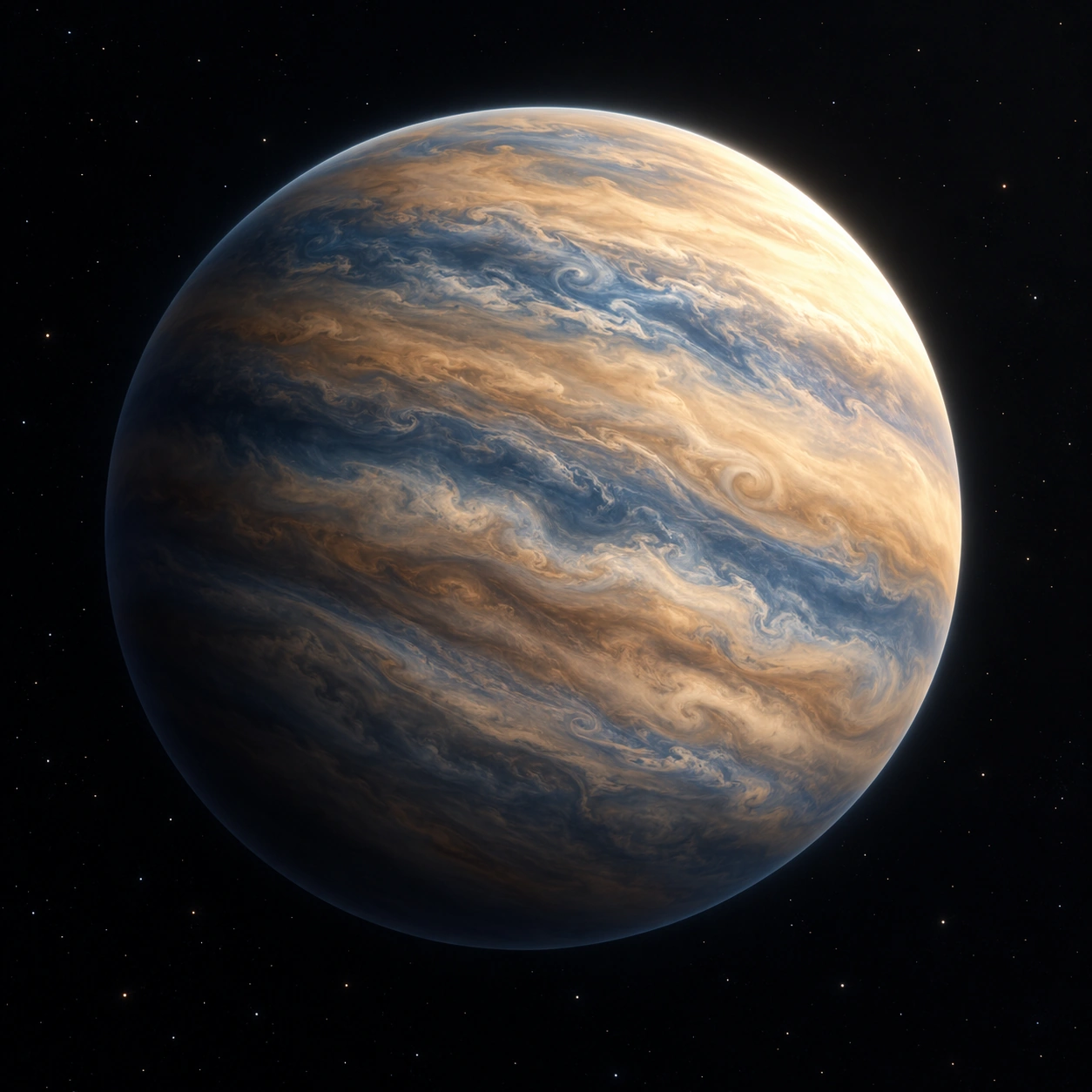
Buy A Galaxy · original commissioned reconstruction
Artist's Reconstruction · View astronomy source
Artist's ReconstructionFull image credit, source & interpretation
Artist's reconstruction based on published astronomical observations and current scientific understanding.
Official catalogue designation: WASP-39 b
Your name for it: Planet Brenda
A low-density gas giant with a vast, hot atmosphere that Webb has examined molecule by molecule. Roughly Saturn’s mass, yet larger than Jupiter.
Values are rounded estimates and may be refined by further observations. Personal names remain ceremonial.
Claim This PlanetA personalised planet gift preview. No order or reservation is made.
A3 poster + A4 printed certificate. Information sheet included.
Paper sizes shown in proportion. Tap either piece to inspect your personalisation.
Live preview · your selected galaxy and personalisation.
Registration number is a demonstration, not a saved registry entry. Artwork image credit
Values are rounded from published catalogue measurements. Sky coordinates identify the host system, not a resolved planetary surface.
WASP-39 b combines a radius about 1.28 times Jupiter’s with less than a third of its mass. Its unusually inflated atmosphere makes it a valuable target for studying gas giants.
Webb spectra reveal water vapour, carbon dioxide and other gases. Sulfur dioxide provides evidence of chemistry driven by stellar light. These are measurements of filtered starlight, rather than close-up photographs of clouds.
The planet orbits a G-type star about every 4.1 days, far closer than Mercury orbits the Sun. It is a hot gaseous world, without the solid landscape suggested by an Earth-like planet.
Webb observations reported in 2024 found differences between the morning and evening sides of the atmosphere. The analysis suggests differences in temperature and cloud cover. Even planetary weather refuses to be straightforward.
Soft pearl and tan clouds meet slate-blue shadows under light from an off-frame star. Cloud textures, exact colours and illumination are an interpretation informed by the atmospheric observations, not observed surface features.
Your personal name sits beside the real designation and astronomical facts. We supply the artwork and ceremonial certificate; the atmosphere remains considerably beyond our control.
Checked 1 October 2026. The source organisations do not endorse this gift.
 Hot Jupiter
A blue planet. Almost nothing like home.
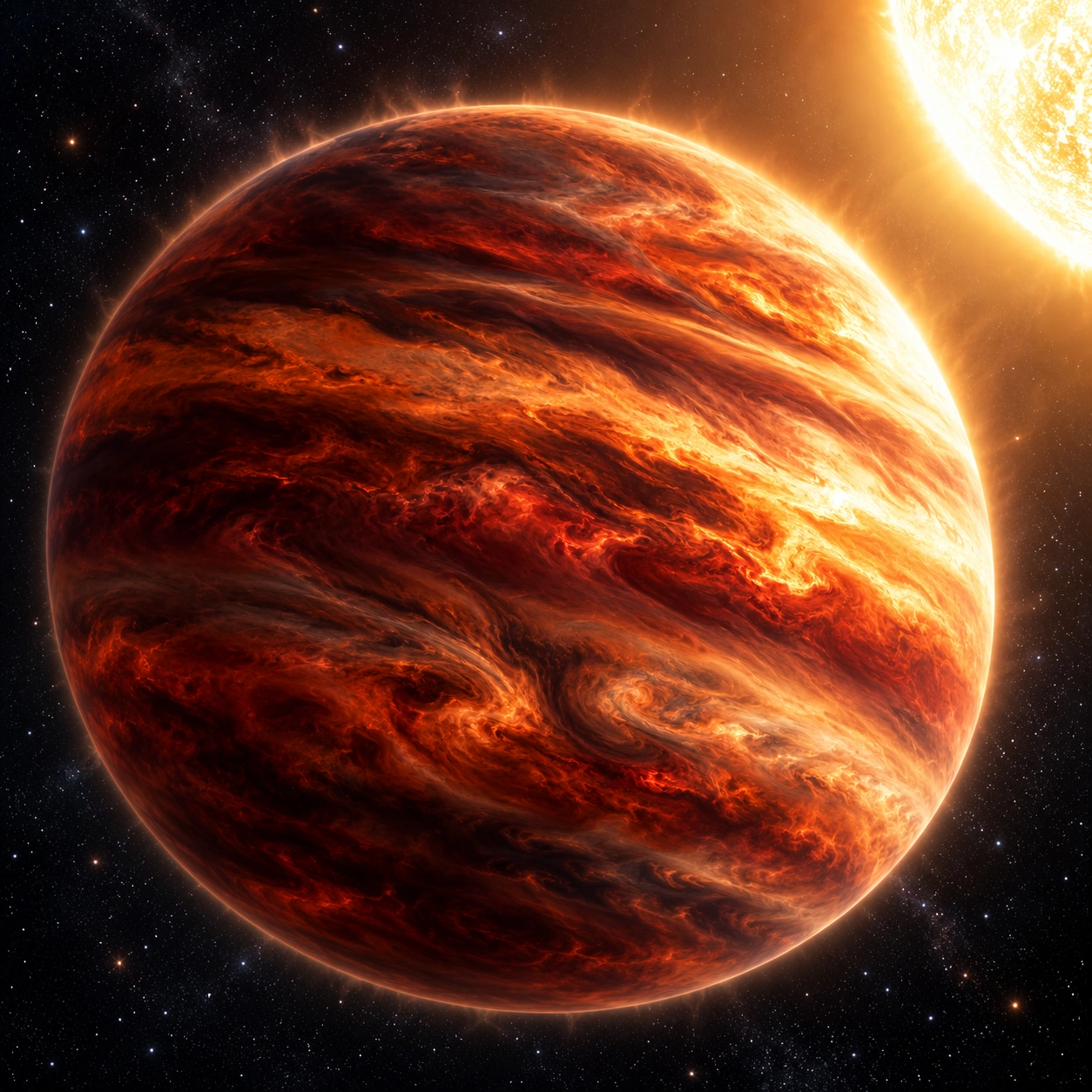 Ultra-hot Jupiter
An excellent choice for someone who likes it warm.
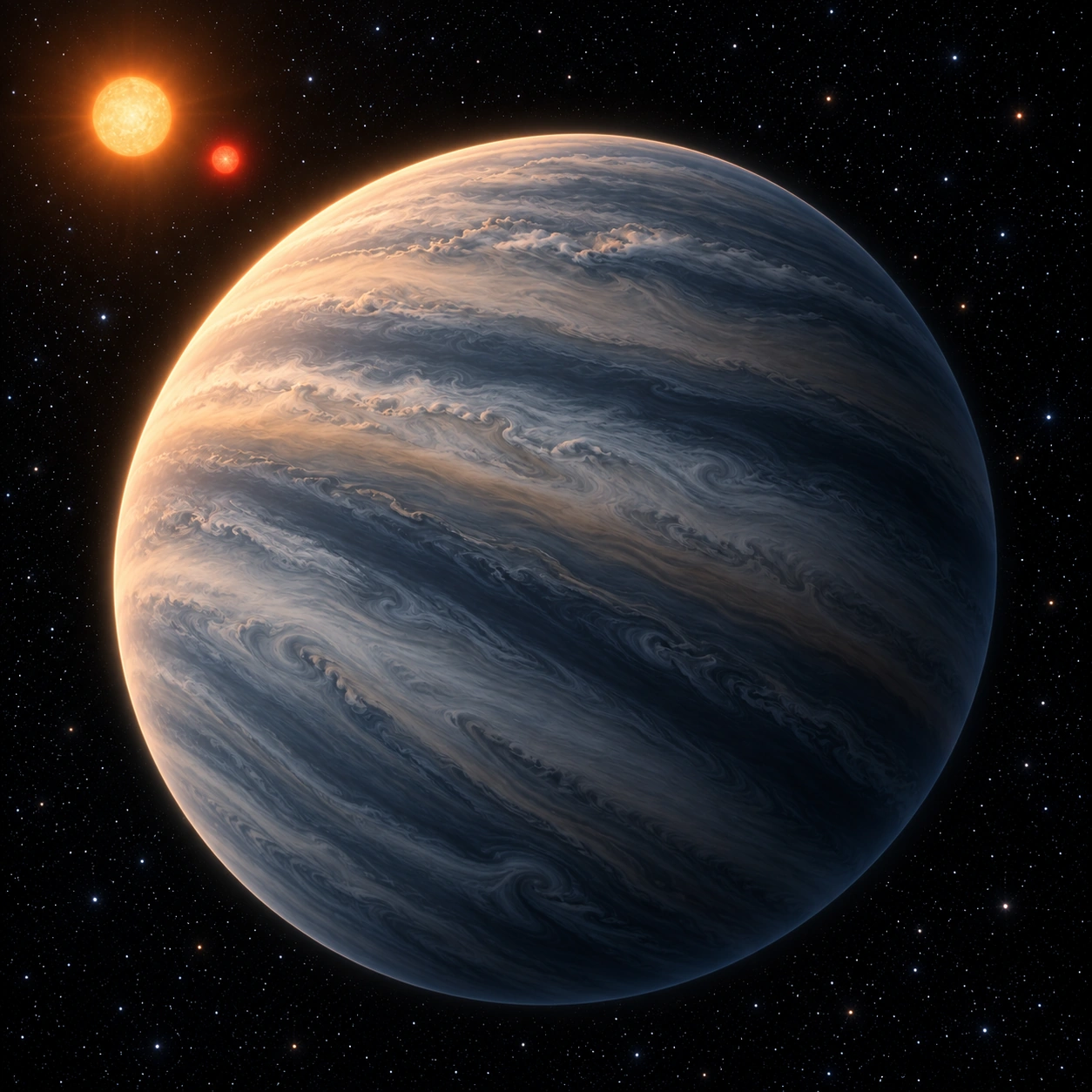 Circumbinary gas giant
Two suns included. Energy bills remain theoretical.